Renovation work
Renovating a home is one of the most significant investments you will ever make. Whether you have just purchased a period property that needs modernising or you are looking to transform your current house into a more functional family space, understanding the fundamentals of renovation work can save you thousands of pounds and countless headaches.
The challenge lies in knowing where to start. Should you tackle the structural changes first, or focus on cosmetic improvements? What about Building Regulations and Party Wall notices? These questions can feel overwhelming, but they do not have to be. This resource breaks down the essential aspects of home renovation in the UK, from knocking through walls to choosing the right flooring, giving you the confidence to plan your project properly.
Think of renovation work as a layered process: you start with the bones of the building (structure and insulation), move to the systems (heating, plumbing, electrics), and finish with the surfaces that bring everything together. Getting this sequence right is often the difference between a smooth project and a costly disaster.
Structural Changes and Open Plan Living
The dream of open plan living has captured the imagination of British homeowners for decades. Removing walls to create flowing kitchen-dining-living spaces can transform a cramped Victorian terrace or a compartmentalised 1930s semi-detached into a modern family home. However, structural changes demand careful planning and professional expertise.
Understanding Load-Bearing Walls
Not every wall can simply be knocked down. Load-bearing walls support the weight of floors, roof structures, or other walls above them. Removing one without proper support will cause serious structural damage, potentially leading to collapse. Contrary to popular belief, you cannot identify a load-bearing wall just by checking the direction of the floor joists above. The wall’s position relative to the overall structure, the age of the property, and any previous modifications all play crucial roles.
A structural engineer should assess the wall before any work begins. Their calculations will determine the size and type of steel beam (or other support) required. This typically costs between £300 and £600 for a report, a modest investment that protects your property and ensures compliance with Building Regulations.
Building Regulations and Party Wall Notices
Any structural work affecting walls requires Building Control approval. You must decide whether to apply before works commence or use an approved inspector during the project. For terraced houses and semi-detached properties, the Party Wall Act comes into play when your work affects shared walls. Serving proper notices to neighbours, typically giving two months’ notice, prevents disputes and potential legal action later.
Fire safety regulations also deserve attention, particularly when creating open plan spaces. Many homeowners overlook requirements for fire doors, smoke detectors, and escape routes, especially in three-storey conversions where regulations become stricter.
Wall Insulation: Internal vs External Solutions
Solid brick homes, common across the UK in properties built before the 1930s, lack the cavity walls that make modern insulation straightforward. Improving their thermal efficiency requires either internal or external wall insulation, each with distinct advantages and complications.
External Wall Insulation
Wrapping your home in insulation from the outside preserves internal floor space and avoids disruption while you remain living in the property. The insulation boards are fixed to external walls and finished with render, brick slips, or other cladding. This approach can dramatically reduce heating bills, with some homeowners reporting savings of 20% or more on energy costs.
However, external insulation changes the appearance of your home significantly. Planning permission may be required, particularly in conservation areas or for listed buildings. The work typically costs between £100 and £150 per square metre, making it a substantial investment.
Internal Wall Insulation
Internal insulation costs less and avoids planning complications, but introduces other challenges. You will lose floor area, typically 50-100mm per insulated wall. More critically, poor installation can create cold spots where timber joists meet external walls, leading to condensation and eventual rot.
Materials matter enormously here. Breathable insulation such as wood fibre boards allows moisture to pass through rather than becoming trapped, making them particularly suitable for older properties with solid walls that were designed to breathe.
Kitchen Renovation: Planning for Success
The kitchen remains the heart of family life, and renovating this space delivers both daily enjoyment and added property value. A well-planned kitchen renovation can be achieved for under £10,000, but requires careful prioritisation and strategic purchasing.
Layout and Workflow
The traditional kitchen triangle (connecting hob, sink, and refrigerator) dates from an era of smaller kitchens and different cooking habits. Modern family kitchens often benefit from multiple work zones: preparation areas, cooking stations, and social spaces that accommodate children doing homework or guests chatting while you cook.
Consider how light falls across work surfaces. A common lighting error places downlights directly above the cook’s head, casting shadows precisely where you need to see clearly. Under-cabinet lighting and carefully positioned ceiling fixtures eliminate this problem.
Smart Purchasing Decisions
Ex-display appliances from kitchen showrooms can offer savings of 40% or more compared to new prices, often with full manufacturer warranties. The best time to find these bargains is when showrooms refresh their displays, typically in early autumn and after the new year.
Cabinet finishes affect both aesthetics and practicality. Matt finishes hide fingerprints better than gloss options, a significant consideration for households with young children.
Flooring Options: Character and Performance
Your choice of flooring affects how your home looks, sounds, and feels underfoot. Each material brings distinct characteristics that suit different rooms and lifestyles.
Original Pine Floorboards
Victorian and Edwardian pine floors offer character that no modern alternative can replicate. Restoring these boards involves addressing gaps, draughts, and surface damage. Pine slivers wedged into gaps provide a more authentic look than modern fillers, while hard wax oil finishes allow the wood to be spot-repaired without sanding entire rooms.
Exposed timber floors amplify impact noise, a consideration for flats or rooms above occupied spaces. Acoustic underlays and rugs help mitigate this effect.
Parquet and Engineered Wood
Herringbone and chevron patterns have surged in popularity, adding visual interest to modern extensions and period properties alike. Chevron installation costs approximately 30% more than herringbone due to the angled cuts required at each board end.
For rooms with underfloor heating, engineered oak outperforms solid wood. The layered construction provides dimensional stability as temperatures fluctuate, preventing the warping and gapping that solid boards often experience.
Porcelain Tiles
High-traffic areas like family kitchens benefit from porcelain’s exceptional durability and stain resistance. Unlike natural stone, porcelain requires no sealing and resists acidic spills that would damage marble or limestone. Wood-effect porcelain offers the aesthetic of timber with practical advantages for wet or heavy-use areas.
Grout colour significantly impacts the finished appearance. Darker grout hides inevitable discolouration better than white, though it can make floors appear busier.
Bathroom Upgrades and Wet Room Considerations
British bathrooms tend towards the compact, making clever design essential. Maximising functionality without sacrificing style requires attention to clearances, fixtures, and ventilation.
Space-Saving Strategies
Wall-hung toilets create visual floor space that makes rooms appear larger, though they require sturdy wall frames for mounting. Walk-in showers work in small bathrooms when door clearances are carefully planned, frameless glass screens minimise visual barriers.
Removing the bath to gain space seems logical but may reduce property value for family homes where buyers expect bathing facilities for children. A compact bath with shower over often provides the best compromise.
Wet Room Installation
Wet rooms eliminate shower enclosures entirely, creating accessible, easy-to-clean spaces. On timber floors, proper waterproofing becomes critical. Liquid waterproof membranes, correctly applied to both the floor and wall junctions, prevent water ingress that could cause structural damage.
Pre-formed shower trays offer more reliable waterproofing than hand-screeded falls, particularly for DIY installations. Trap depth and diameter affect drainage speed, undersized traps cause frustrating slow drainage.
Wall Finishes for Period Properties
Older homes present unique challenges for wall finishes. Victorian and Edwardian walls were built to breathe, allowing moisture to pass through rather than becoming trapped. Modern materials can disrupt this balance.
Breathable Finishes
Lime wash and lime plasters work with traditional construction rather than against it. Unlike modern emulsion paints, lime wash cures through carbonation rather than simply drying, developing its distinctive cloudy aesthetic over time. This curing process requires patience and proper technique to avoid chalking.
Modern vinyl wallpapers trap moisture within walls, causing plaster to blow and requiring expensive repairs. Breathable alternatives exist but must be chosen carefully.
Dealing with Artex
Textured coatings applied before the mid-1980s may contain asbestos. Professional testing before any disturbance is essential. Where artex is confirmed safe, skim coating provides a smooth surface without the dust and disruption of removal.
Loft and Basement Conversions
Adding living space without extending your footprint makes conversions attractive, particularly in areas where land values are high. London homeowners, for instance, frequently weigh loft against basement options.
Loft Conversions
Converting a loft typically costs less per square metre than a basement and causes less disruption during construction. Hip-to-gable conversions and dormers maximise usable floor area with adequate headroom. Fire escape routes become critical in three-storey homes, requiring compliant windows, doors, and detection systems.
Basement Conversions
Basements add the most value per square metre but cost approximately £1,000 more per square metre than loft conversions. Waterproofing (tanking) failures can cause flooding years after completion, making contractor selection and warranty provisions crucial. Party Wall notices are typically required for excavation near neighbouring properties.
Electrical Upgrades and Smart Lighting
Modern lighting transforms how rooms look and feel. LED technology offers energy efficiency and longevity, but requires compatible dimming systems to function properly.
Leading-edge dimmers, designed for incandescent bulbs, cause LED flickering at low levels. Trailing-edge dimmers provide smooth LED dimming but require a neutral wire that many older installations lack. Smart dimmer systems offer convenience but add complexity.
Dim-to-warm technology replicates the warming effect of traditional incandescent bulbs as brightness decreases, maintaining a cosy atmosphere that standard LEDs cannot achieve.
Successful renovation work combines careful planning, appropriate professional support, and realistic budgeting. Each project presents unique challenges determined by your property’s age, construction, and condition. The articles throughout this section explore each topic in greater depth, helping you make informed decisions whether you are removing a load-bearing wall, choosing bathroom tiles, or converting your loft into a master bedroom.
Why Do Your Dimmable LEDs Flicker at Low Levels?
Flickering is rarely a sign of a « bad bulb, » but rather a fundamental clash between modern digital drivers and legacy analog dimmers. Old leading-edge dimmers chop the AC waveform in a way that starves LED drivers of power. Incorrect load…
Lire la suite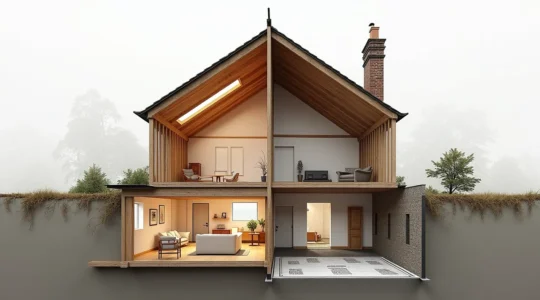
Loft vs Basement: Which Conversion Adds More Value in London?
The most profitable conversion isn’t about gaining the most space, but the most valuable space; basements often fail this test despite their higher initial appeal. Basements cost up to double per square metre due to extensive structural work and critical…
Lire la suite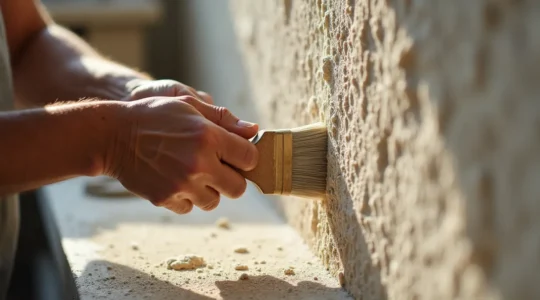
How to Apply Lime Wash to Fresh Plaster Without It Chalking?
In summary: The key to a durable lime wash finish is understanding it’s a chemical reaction (carbonation), not a simple drying process. Proper humidity is essential. Chalking and dusting are failures of carbonation, often preventable with the right surface preparation…
Lire la suite
Plaster vs. Paint: The Building Science of Making Victorian Walls Breathe
Choosing a wall finish for a Victorian home isn’t about style; it’s about building science. Most modern paints and wallpapers actively trap moisture, causing the very damp problems they’re meant to hide. Modern materials like vinyl and gypsum create a…
Lire la suite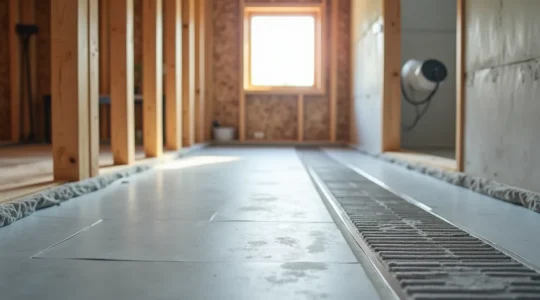
Wet Room Installation: How to Avoid Leaks on Timber Floors?
The catastrophic failure of a wet room on a timber floor is almost never a single event, but a chain reaction starting with invisible floor movement. Structural deflection (floor bounce) is the primary enemy, causing cracks that compromise the entire…
Lire la suite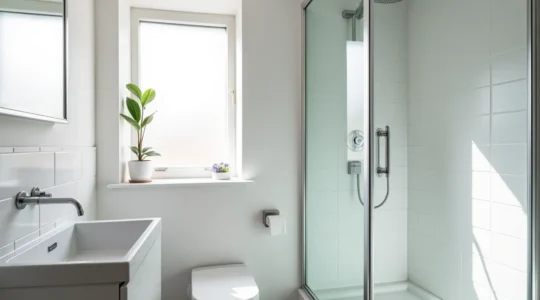
How to Fit a Walk-In Shower into a Small British Bathroom?
Installing a walk-in shower in a small British bathroom is less about style and more about smart structural engineering. Prioritise reinforcing timber floors to prevent the deflection that cracks grout and causes leaks. Use wall-hung fixtures and recessed « invisible » storage…
Lire la suite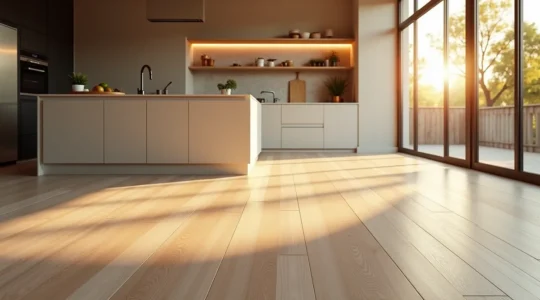
Porcelain Tiles: The Best Choice for High-Traffic Family Kitchens?
Porcelain tile is more than just a durable surface; it’s a complete flooring system engineered to defeat the daily chaos of family kitchens with kids and dogs. Its near-zero porosity makes it virtually immune to common household stains like red…
Lire la suite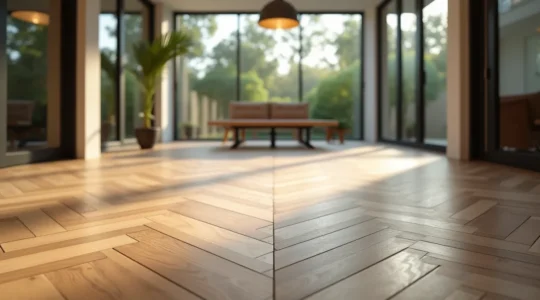
Herringbone vs. Chevron: A Designer’s Guide to Choosing the Right Parquet for Your Kitchen Extension
The choice between herringbone and chevron is not about trends; it’s an architectural decision that dictates spatial flow, installation integrity, and long-term performance. Chevron patterns create strong directional lines ideal for guiding movement in open-plan spaces, but incur higher material…
Lire la suite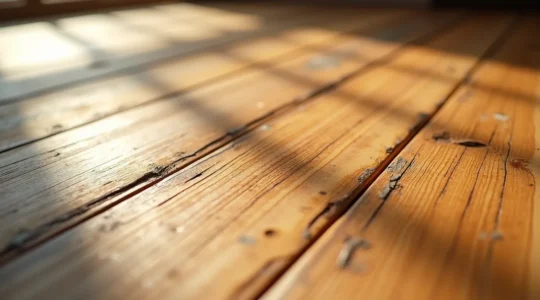
Restoring Pine Floorboards: How to Fix Gaps and Draughts?
In summary: Embrace the floor’s history; « honest imperfection » is more authentic than a flawless, new look. Fill gaps with custom-cut pine slivers for a seamless, durable, and traditional finish that moves with the wood. Choose a hard wax oil over…
Lire la suite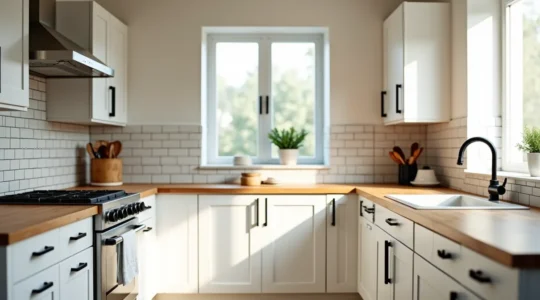
How to Plan a Kitchen Renovation for Under £10,000?
Achieving a high-quality family kitchen for under £10,000 is not about cutting corners, but about a smart budget allocation strategy. Labour is your biggest variable cost; strategic choices in materials and layout can drastically reduce it. Prioritise investment in high-use,…
Lire la suite