Eco-responsible decoration
Every piece of furniture, every coat of paint, every textile in your home carries an environmental footprint. From the forests where wood is harvested to the factories where fabrics are woven, conventional decoration often involves hidden costs: deforestation, chemical pollution, exploitative labour practices, and significant carbon emissions from global shipping. Recent estimates suggest that the home furnishing industry accounts for a substantial portion of household carbon footprints, making conscious choices in this area genuinely impactful.
Eco-responsible decoration offers a different path. It’s an approach to interior design that considers the full lifecycle of materials—where they come from, how they’re made, how they perform in your home, and what happens when they reach the end of their useful life. This isn’t about sacrificing style for sustainability; rather, it’s about making informed choices that benefit both your living space and the planet.
This comprehensive resource explores the key pillars of sustainable home decoration: from biophilic design that reconnects urban dwellers with nature, through organic textiles and certified wood products, to energy-efficient solutions and non-toxic finishes. Whether you’re renovating a period property or furnishing a new build, understanding these principles will help you create a healthier, more responsible home.
Biophilic Design: Why Bringing Nature Indoors Matters
The concept of biophilic design stems from our innate connection to the natural world. For urban apartment dwellers without access to gardens, incorporating living elements into interior spaces isn’t merely aesthetic—it’s essential for wellbeing. Studies consistently demonstrate that indoor plants improve concentration, reduce stress, and even enhance air quality by filtering certain pollutants.
Choosing the Right Plants for Your Environment
Not all plants thrive in typical home conditions. Central heating creates dry atmospheres that challenge moisture-loving species like ferns, while low-light corners can prove fatal to sun-worshippers. Snake plants have gained popularity for good reason: they release oxygen at night, tolerate neglect, and adapt to various light conditions. However, successful plant parenting requires matching species to your specific environment rather than following trends blindly.
Living Walls vs Preserved Moss
For those seeking dramatic green features without daily maintenance, two options dominate the market:
- Living walls require irrigation systems and regular care but provide genuine air-purifying benefits
- Preserved moss panels offer zero maintenance but no active biological function
- Hybrid approaches combine living plants with preserved elements for balanced aesthetics
The choice depends on your commitment level and whether you value the practical benefits of living plants or simply their visual appeal. One often-overlooked concern with indoor planters is water damage risk to wooden floors—always use appropriate saucers and waterproof barriers.
Sustainable Textiles: Navigating Organic and Natural Fabrics
Soft furnishings represent a significant opportunity for eco-conscious choices, but the textile market is rife with confusing claims and outright greenwashing. Understanding the genuine differences between materials helps you invest wisely.
Linen, Hemp and Organic Cotton
These three natural fibres each offer distinct advantages for busy households:
- Linen (from flax) requires minimal water and pesticides to grow, becoming softer with each wash whilst remaining remarkably durable
- Hemp grows even faster than flax, produces strong fibres, and improves soil health where cultivated
- Organic cotton avoids the heavy pesticide use of conventional cotton but still requires substantial water
For families with children or pets, stain resistance matters. Recycled polyester often outperforms organic cotton in this regard, though it sheds microplastics during washing—a trade-off worth considering.
The ‘Bamboo Rayon’ Trap
Marketing frequently positions bamboo textiles as eco-friendly, but the reality proves more complex. While bamboo grows rapidly without pesticides, converting it into soft fabric typically involves the viscose process—an industrial treatment using caustic chemicals that often pollutes waterways near manufacturing facilities. The resulting fabric, technically rayon, bears little resemblance to natural bamboo. True mechanical bamboo linen exists but commands premium prices and feels considerably coarser.
Home Insulation: The Foundation of Energy-Efficient Living
Before investing in renewable heating systems, addressing heat loss makes both environmental and financial sense. A poorly insulated home can lose up to 25% of its heat through the roof alone, making loft insulation one of the most cost-effective green upgrades available.
Insulation Materials Compared
Several options suit different situations and budgets:
- Mineral wool remains the most common choice, offering good thermal performance at reasonable cost—though proper installation without blocking ventilation pathways proves crucial
- Sheep’s wool naturally regulates humidity and contains no irritating fibres, making it ideal for DIY installation in period properties
- PIR boards deliver superior insulation per centimetre of thickness, essential where space constraints exist
A common mistake involves squashing insulation under boarding to create storage space—this dramatically reduces effectiveness. Compressed insulation traps less air and performs far worse than its rated value suggests.
UK Grant Schemes and Eligibility
Current programmes like the Great British Insulation Scheme offer significant support for eligible households. Checking qualification criteria before proceeding can transform project economics, potentially covering a substantial portion of installation costs.
Heat Pumps and Renewable Heating Systems
Air source heat pumps represent the leading technology for decarbonising home heating, but they’re not universally suitable. Understanding their requirements prevents costly disappointments.
Compatibility Considerations
Heat pumps operate at lower flow temperatures than gas boilers, which creates challenges for certain properties:
- Homes with microbore pipework (small-diameter pipes common in certain eras) often struggle to distribute sufficient heat
- Undersized radiators—adequate for high-temperature gas systems—may leave rooms cold
- Older properties typically require improved insulation before heat pump installation becomes viable
The Boiler Upgrade Scheme currently offers grants of up to £7,500 towards heat pump installation, significantly improving payback periods for suitable properties. Pairing systems with solar PV panels can further reduce running costs, effectively providing free heating during sunny periods.
Ethical Sourcing and Certification Standards
Sustainable materials mean little if their production involves exploitative labour or deceptive practices. Verifying supply chains has become essential for genuinely responsible purchasing.
Understanding Wood Certifications
Two main certification bodies dominate the timber market, but their labels require careful interpretation:
- FSC 100% indicates all wood comes from certified sustainable forests—the gold standard
- FSC Mix allows combination with uncertified sources, offering weaker guarantees
- FSC Controlled Wood merely avoids the worst practices without ensuring sustainability
- PEFC certification operates similar standards through different governance structures
Verifying authenticity involves checking licence codes against public databases. Tropical hardwoods without documentation carry particular risk of originating from illegal logging operations. When possible, choosing fast-growing softwoods over slow-growing hardwoods reduces pressure on old-growth forests.
Beyond Certification Labels
The phrase ‘Made in Europe’ doesn’t automatically guarantee ethical labour conditions—subcontracting and complex supply chains can obscure exploitative practices. Similarly, identifying natural dyes versus chemical alternatives in rugs requires either laboratory testing or trusting established specialist suppliers. The carbon footprint of heavy furniture shipped from Asia can outweigh material sustainability benefits, making local or regional sourcing increasingly relevant.
Sustainable Flooring: Bamboo, Cork and Reclaimed Options
Flooring decisions significantly impact both room aesthetics and environmental footprint. Each sustainable option carries specific considerations.
Bamboo Flooring Realities
Bamboo’s rapid growth makes it theoretically sustainable, but product quality varies enormously. Strand woven bamboo achieves hardness ratings approximately twice that of oak, handling dogs and high heels with ease. Standard horizontal or vertical bamboo proves considerably softer. Critical factors include:
- Proper acclimatisation to prevent shrinkage gaps after installation
- Avoiding cheap products containing formaldehyde-based glues that off-gas harmful VOCs
- Understanding refinishing limitations—thin wear layers cannot be sanded like solid hardwood
Cork offers lower carbon credentials than bamboo for UK installations, given shorter transport distances from Mediterranean producers.
Reclaimed Wood: Opportunities and Hazards
Giving wood a second life represents excellent circular economy practice, but reclaimed materials carry hidden risks. Pallets marked ‘MB’ have undergone methyl bromide fumigation and are unsafe for indoor furniture. Industrial scaffold boards may contain oil stains requiring specialist removal. Woodworm infestation often remains invisible until larvae emerge months after installation. Sealing reclaimed timber properly—choosing between varnish for maximum contaminant blocking versus wax for breathability—depends on the wood’s history and intended use.
Natural Paints and VOC-Free Finishes
Conventional paints release volatile organic compounds that compromise indoor air quality and contribute to outdoor pollution. Natural alternatives exist but require adjusted expectations.
Working with Natural Paints
VOC-free formulations behave differently than their conventional counterparts:
- Curing times extend significantly in humid conditions—rushing this process causes failure
- Water-based paints can ‘block’ together if doors or windows close before proper drying
- Tannin bleed from certain woods requires appropriate natural primers
- Clay and chalk paints suit different substrates—understanding plaster porosity guides selection
The two-week cure rule before using newly painted nurseries protects infant respiratory systems. Natural paints also require gentler cleaning; aggressive scrubbing can remove the finish entirely.
Creating an eco-responsible home involves balancing multiple considerations: material sustainability, energy efficiency, ethical sourcing, and indoor air quality. No single choice achieves everything, but informed decisions across these categories collectively create spaces that nurture both inhabitants and planet. Each topic explored here connects to detailed guides addressing specific challenges—from keeping ferns alive in centrally heated rooms to verifying FSC certification authenticity—providing pathways for deeper exploration as your sustainable decoration journey continues.
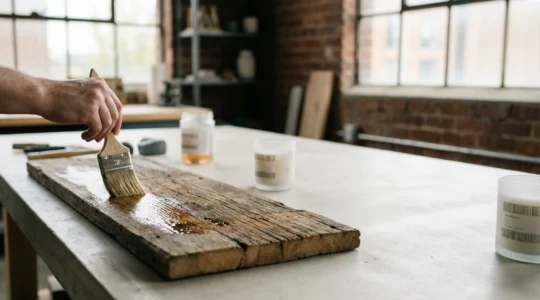
How to Seal Reclaimed Industrial Wood to Block Toxins?
The secret to safe upcycling isn’t just sanding; it’s encapsulation. Methyl Bromide (MB) stamps on pallets indicate a toxic gas hazard that requires specific handling or avoidance. Standard oils and waxes are permeable; only film-forming finishes like polyurethane or shellac…
Lire la suite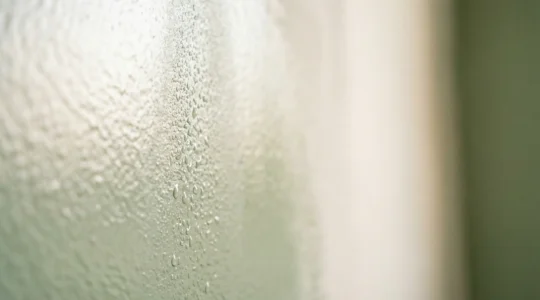
Why Do VOC-Free Paints Take Longer to Cure in Humid Homes?
Natural paints rely on complex oxidation and carbonation processes that are significantly more sensitive to atmospheric moisture than synthetic acrylics. Synthetic paints use coalescing solvents to force-dry rapidly, whereas natural binders (oils, lime, clay) need time to interact with oxygen…
Lire la suite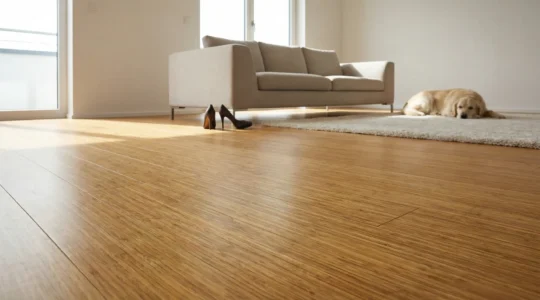
Is Bamboo Flooring Hard Enough for Dogs and High Heels?
Strand woven bamboo is technically harder than oak, but its finish is the real line of defense against claws and heels. Strand woven varieties score up to 3x higher on the Janka scale than traditional hardwoods. Moisture control during installation…
Lire la suite
FSC Mix vs FSC 100%: What Are You Actually Buying?
Buying « certified » wood isn’t always as straightforward as spotting a tree logo; the real story lies in the « Chain of Custody. » FSC Mix guarantees only 70% certified material, while the rest is merely « controlled. » « Made in Europe » is not a…
Lire la suite
How to Verify Ethical Supply Chains for Home Decor Brands?
True sustainability in home decor requires looking past the marketing label and demanding chain of custody evidence. « Made in Europe » does not guarantee ethical labour practices; sweatshops exist globally. Materials like « Bamboo Rayon » and « FSC Mix » often hide chemical processing…
Lire la suite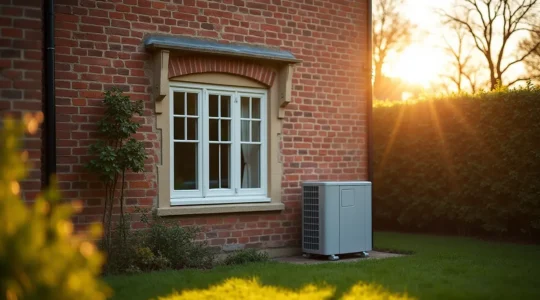
Air Source Heat Pumps: Are They Viable for Older UK Properties?
Yes, a heat pump can be highly effective in an older UK property, but success hinges entirely on a holistic system design, not just the unit itself. Poor performance is almost always due to inadequate insulation, undersized radiators, or a…
Lire la suite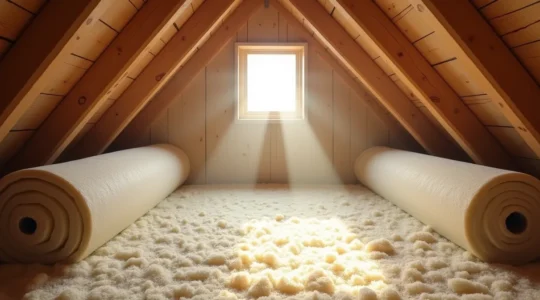
Loft Insulation: How to Stop Losing 25% of Your Heat Through the Roof?
In summary: An uninsulated roof is responsible for a quarter of your home’s heat loss, making rooms cold and bills unnecessarily high. Correct installation requires a depth of at least 270mm while maintaining crucial airflow at the eaves to prevent…
Lire la suite
Linen or Hemp: Which Organic Fabric Suits a Busy Family Home?
For a busy, sensitive household, the choice between linen and hemp isn’t about style—it’s about selecting a fabric with the inherent molecular integrity to withstand daily life while minimizing chemical load. Hemp generally offers superior durability and microbial resistance, making…
Lire la suite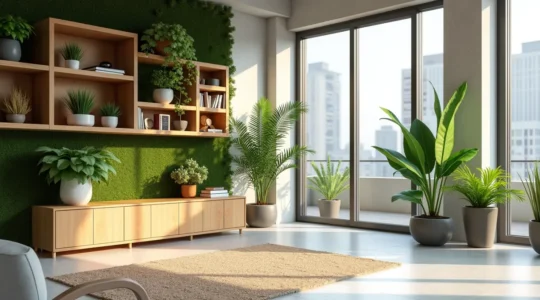
Why Biophilic Design Is Essential for Urban Apartments with No Garden?
Contrary to popular belief, scattering a few houseplants is not true biophilic design; it’s about re-engineering your apartment into a functional wellness ecosystem to combat urban-induced stress. Effective biophilic design involves creating sensory-rich « micro-habitats » that actively regulate your home’s environment…
Lire la suite
From kitchen to climate: the new generation of intelligent home equipment
Almost nine out of ten UK households now own at least one smart device, according to Statista market forecast data 2025. That figure caught me off guard when I first saw it. Walking through homes across Surrey and Manchester, I…
Lire la suite