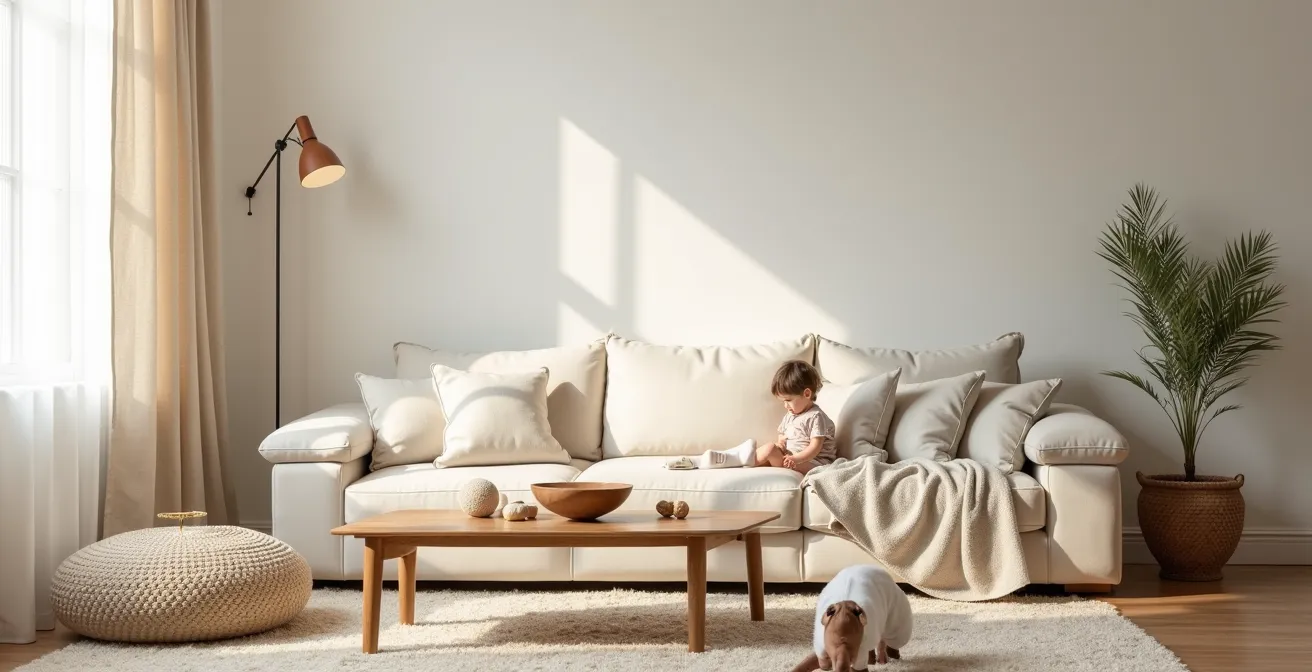
For a busy, sensitive household, the choice between linen and hemp isn’t about style—it’s about selecting a fabric with the inherent molecular integrity to withstand daily life while minimizing chemical load.
- Hemp generally offers superior durability and microbial resistance, making it ideal for high-traffic upholstery and rugs.
- Linen excels in softness that improves with age and moisture-wicking properties, perfect for bedding and direct skin contact.
Recommendation: Prioritize GOTS or OEKO-TEX certified European linen or hemp to guarantee a verifiable, low-chemical supply chain from farm to fabric.
In a bustling family home, soft furnishings are on the front lines. From spilled juice on the sofa to constant wear on bedding, the dream of a pristine, healthy living space often clashes with reality. The standard advice is to “go natural,” but this simple mantra is dangerously incomplete. It overlooks the vast differences between fibers and, more importantly, the hidden chemical load that even “natural” textiles can carry from the farm to your living room.
Many homeowners gravitate towards linen or hemp, knowing they are superior to synthetics. But the real decision isn’t just about choosing a plant-based fiber. It’s about understanding which one performs better under the specific pressures of family life—stains, allergies, and the need for longevity. The true value of a fabric goes beyond its name; it lies in its molecular integrity and the transparency of its production journey.
This is where we move beyond the marketing labels. The key to a truly durable and non-toxic home environment is not just picking linen or hemp, but understanding their fundamental properties and demanding a verifiable, ethical supply chain. This is the only way to ensure the fabric you bring home is a source of comfort, not a carrier of allergens and industrial residues.
This guide will deconstruct the choices you face as a discerning parent or allergy-sufferer. We will explore the tangible differences in performance, the pitfalls of greenwashing, and the practical steps to identify and care for textiles that genuinely contribute to a healthier home. By focusing on verifiable facts over vague claims, you can make a choice that protects both your investment and your family’s well-being.
Summary: Linen or Hemp: A Consultant’s Guide to Healthy Home Textiles
- Why Synthetic Blends Exacerbate Eczema in Winter
- How to Wash Organic Linen Covers Without Shrinkage
- Organic Cotton vs Recycled Polyester: Which Resists Stains Better?
- How to Verify Ethical Supply Chains for Home Decor Brands?
- The ‘Bamboo Rayon’ Trap: When ‘Natural’ Isn’t Eco-Friendly
- When to Buy Linens: Utilizing Sales Cycles for High-End Fabrics
- Why Indoor Plants Improve Concentration for Home Workers
- How to Identify Natural Dyes in Rugs vs Chemical Fakes
Why Synthetic Blends Exacerbate Eczema in Winter
For households managing sensitive skin or eczema, the choice of fabric is not a matter of preference but of health. During winter, when indoor heating reduces humidity and dry skin becomes more prevalent, synthetic fabrics like polyester and acrylic can become significant irritants. Unlike breathable natural fibers, synthetics trap a microscopic layer of moisture and heat against the skin. This creates a humid microclimate that disrupts the skin’s natural barrier and fosters an environment where irritants can thrive.
The problem is more than just a lack of breathability. The very structure of synthetic fibers can be problematic. Research shows that synthetic fibers can alter the skin microbiome, disrupting up to 48% of the protective barrier function. This disruption makes the skin more vulnerable to allergens and flare-ups. Furthermore, these fabrics are often treated with a cocktail of chemicals—dyes, softeners, and anti-static agents—that can act as contact allergens, turning a cozy blanket into a source of constant irritation.
To protect sensitive skin, especially during the dry winter months, it’s crucial to minimize contact with these materials. Key strategies include:
- Prioritizing natural base layers: Always have a layer of organic cotton, silk, linen, or hemp between the skin and any synthetic outerwear.
- Checking the blend: Avoid fabrics that blend natural and synthetic fibers, as they often negate the benefits of the natural component and can still irritate the skin.
- Choosing certified textiles: Look for OEKO-TEX or GOTS certifications. These standards restrict the use of harmful chemicals, reducing the overall chemical load of the fabric and ensuring it’s safer for direct skin contact.
How to Wash Organic Linen Covers Without Shrinkage
One of the primary concerns for anyone investing in high-quality linen is the fear of shrinkage. Linen fibers, derived from the flax plant, are known for their strength and absorbency, but they can contract if not handled correctly during washing. The key to preserving the size and shape of your organic linen covers lies in avoiding thermal shock and managing the drying process with care. Drastic changes in water temperature are the main culprit behind shrinkage.
This image provides an extreme close-up of wet linen fibers, illustrating how they absorb water. Understanding this absorbent nature is key to proper care.

As you can see, the fibers swell with water. To prevent them from contracting and locking into a smaller size upon drying, a consistent and gentle approach is essential. A professional yet simple washing routine can ensure your linen remains perfectly fitted for years. The goal is to clean effectively while respecting the molecular integrity of the fibers.
Follow these steps to wash organic linen without fear:
- Use consistent water temperatures: Wash and rinse in either cold or warm water. Avoid switching from hot to cold, as this temperature shock causes fibers to constrict.
- Add white vinegar to the rinse cycle: About one cup helps dissolve detergent residue and hard water minerals that can make linen feel stiff, preserving its natural softness.
- Avoid overloading the machine: Linen needs room to move freely to get clean and to prevent excessive wrinkling and stress on the fibers.
- Stretch while damp: When the linen is about 80% dry, gently pull and reshape the covers. This helps realign the fibers and counteracts any minor shrinkage that may have occurred.
- Air dry when possible: If you must use a dryer, choose a low heat setting and remove the item while it is still slightly damp. Over-drying is a primary cause of stiffness and shrinkage.
Organic Cotton vs Recycled Polyester: Which Resists Stains Better?
When choosing fabrics for a family home, stain resistance is a non-negotiable property. While linen and hemp are top contenders, many homeowners also consider organic cotton and recycled polyester. A 2023 survey revealed that 79% of consumers prioritize quality when choosing sheets, with 70% specifically seeking ‘100% cotton’ labels, indicating a strong preference for natural fibers. However, how do these materials actually perform against the inevitable spills?
The answer lies in their fundamental relationship with water and oil. Organic cotton, being a natural cellulose fiber, is hydrophilic (it loves water). This means it will absorb water-based spills like juice or coffee quickly. While this sounds problematic, it also means these stains can be easily flushed out in the wash. Recycled polyester, on the other hand, is hydrophobic (it repels water), so liquids will initially bead up. The real issue with polyester is its oleophilic nature—it attracts and holds onto oils. This includes body oils, greasy food stains, and lotions, which can build up over time and become nearly impossible to remove, especially if heat is applied.
The following table breaks down the practical differences in stain resistance, which is critical for making an informed choice for items like sofa covers, bedding, and tablecloths.
| Property | Organic Cotton | Recycled Polyester |
|---|---|---|
| Water-based stains | Absorbs readily (hydrophilic) | Resists initial absorption |
| Oil-based stains | Releases easily in wash | Attracts and holds (oleophilic) |
| Heat-setting risk | Forgiving with hot water | Permanent bonding with heat |
| Long-term buildup | Releases body oils easily | Accumulates invisible oils |
| Odor retention | Naturally breathable | Traps odors requiring special treatment |
Ultimately, while recycled polyester might seem practical for its initial water repellency, organic cotton (much like linen and hemp) is far superior for long-term cleanliness and hygiene in a family setting due to its ability to release oily stains and resist odor buildup.
How to Verify Ethical Supply Chains for Home Decor Brands?
Choosing a healthy fabric goes beyond the raw material; it extends to the entire production process. An ethical supply chain ensures that the fabric is not only safe for your family but also made without exploiting workers or the environment. However, many brands use vague terms like “sustainable” or “eco-friendly” without providing proof. As a consultant, I advise clients to become investigators and look for concrete traceability markers rather than marketing claims.
True transparency is about verification. A truly ethical brand will not hide its production process. In fact, traceability is becoming a standard in high-end textile sourcing. For example, the 2024 linen fabric market report confirms that France, Belgium, and Italy jointly supply over 75% of global flax with blockchain-tracked batches. This level of transparency allows for verification at every step, from the farm to the finished fabric, ensuring a low chemical load and adherence to labor standards.
When evaluating a brand, you must look past the glossy homepage and dig for evidence. An ethical supply chain is built on certifications and a willingness to be transparent about partners. This is where you can truly assess a brand’s commitment to health and sustainability.
Action Plan: Verifying a Brand’s Ethical Claims
- Look for a dedicated ‘Transparency’ section: Go beyond marketing pages. Serious brands have specific sections on their website detailing their supply chain, factories, and material sourcing.
- Evaluate the certification hierarchy: The Global Organic Textile Standard (GOTS) is the gold standard, covering the entire chain from farm to factory. Fair Trade and SA8000 are also strong indicators of ethical labor practices.
- Ask about fabric mills (Tier 2): Inquire directly with the brand about their Tier 2 suppliers—the mills that weave the fabric. A transparent brand will be able to provide this information.
- Research factory lists and audits: Leading ethical brands often publish lists of their factories and the results of third-party audits. A lack of this information is a red flag.
- Verify wage transparency: The most committed brands go as far as publishing data on worker compensation to prove they pay living wages, not just minimum wages.
The ‘Bamboo Rayon’ Trap: When ‘Natural’ Isn’t Eco-Friendly
In the search for soft, sustainable textiles, “bamboo” fabric often appears as a top contender. It’s marketed as a green miracle—fast-growing, renewable, and silky soft. However, this is one of the most common and deceptive “greenwashing” traps in the textile industry. The vast majority of fabric labeled as bamboo is actually bamboo viscose, or rayon, a material that undergoes an intensely chemical-heavy process to be created.
The process involves dissolving bamboo pulp in a toxic chemical solvent, carbon disulfide, which is a known neurotoxin linked to severe health risks for factory workers. The resulting syrupy liquid is then extruded into fibers to be spun into thread. While the raw material is natural, the end product is a semi-synthetic fiber whose production is far from eco-friendly or healthy. The only truly natural bamboo fabric is “bamboo linen,” which is mechanically processed like linen and hemp and results in a coarse, rough texture—nothing like the silky sheets being advertised.
Distinguishing between deceptive bamboo rayon and genuinely sustainable alternatives requires a critical eye. Here’s how to avoid the trap:
- Check the label for specifics: If the tag just says “bamboo” or “from bamboo,” it’s almost certainly rayon/viscose. Look for terms like “mechanically processed bamboo” or, better yet, choose an alternative like TENCEL™ Lyocell.
- Evaluate the texture: If it feels incredibly soft and silky like satin, it is a chemically processed fiber. Natural, mechanically processed fibers have a more textured, linen-like feel.
- Look for trusted certifications: The TENCEL™ brand is a reliable alternative. It refers to lyocell, a fiber made from wood pulp using a closed-loop process where over 99% of the non-toxic solvent is recycled. It offers a similar silky feel without the toxic chemical load.
When to Buy Linens: Utilizing Sales Cycles for High-End Fabrics
Investing in high-quality organic linen or hemp is a significant financial decision. While the durability and health benefits justify the upfront cost, strategic shopping can make these premium textiles much more accessible. The home textiles market, like fashion, operates on seasonal cycles, creating predictable opportunities for savvy consumers to purchase high-end fabrics at a considerable discount. The key is to understand and anticipate these sales periods.
The demand for natural, eco-friendly fabrics is on the rise. A 2024 market analysis shows the linen fabric market is projected to grow at an 11% CAGR, with over 60% consumer preference for eco-friendly fabrics. This growing demand means prices are generally firm, but it also means brands must clear out inventory to make way for new collections, creating sales opportunities. Understanding the lifecycle cost of your purchase means recognizing that buying a durable fabric on sale is a far better long-term investment than repeatedly buying cheaper, less durable alternatives.
To acquire premium linens without paying the premium price, align your shopping calendar with the industry’s retail cycle. Here are the key times to look for the best deals:
- August and September: This is when retailers hold end-of-summer clearances to make room for fall and winter collections. Spring/summer colors and lighter-weight linens are often marked down by 30-50%.
- President’s Day Weekend (February): Often overlooked, this holiday weekend can feature significant markdowns on home goods, including bedding and textiles, with less competition than Black Friday.
- Labor Day (September): Another key holiday for home textile promotions, with discounts typically ranging from 25-40%.
- Look for ‘Seconds’ or ‘Imperfect’ Sales: High-end brands occasionally sell items with minor, often unnoticeable, weaving imperfections at a steep discount of 40-60%. This is an excellent way to get top-tier quality for less.
- Track Discontinued Dye Lots: When a brand retires a color, the remaining stock is often sold at a clearance price. If you are not set on a specific shade, this is a fantastic opportunity.
Why Indoor Plants Improve Concentration for Home Workers
Creating a healthy home environment extends beyond the fabrics we touch; it involves the very air we breathe and the space we inhabit. For the increasing number of people working from home, maintaining focus amidst domestic distractions is a daily challenge. Interestingly, one of the simplest and most effective ways to enhance concentration and reduce stress is by incorporating indoor plants into your workspace. This practice, known as biophilia, connects us to nature and has been shown to have profound psychological benefits.
This home office, filled with natural light and a variety of plants, creates an environment conducive to focus and well-being.

As seen in the image, a space enriched with natural elements feels calmer and more restorative. Studies have demonstrated that the presence of indoor plants can improve productivity and concentration by up to 15%. They work on multiple levels: visually, they break the monotony of a sterile office environment, and physiologically, they can help purify the air by absorbing toxins and releasing oxygen. This creates a cleaner, more invigorating atmosphere that directly supports cognitive function.
This holistic approach to a healthy home beautifully complements the decision to choose natural textiles like linen and hemp. Just as plants filter the air, choosing fabrics free from a heavy chemical load contributes to a cleaner indoor ecosystem. A home that supports well-being is one where every element is chosen with intention—from the air-purifying snake plant in the corner to the non-toxic linen sheets on the bed. Together, they create a sanctuary that nurtures both mind and body.
Key Takeaways
- Synthetics trap moisture and disrupt skin health; prioritize breathable natural fibers like linen and hemp for direct skin contact.
- True sustainability is verifiable: look for GOTS or OEKO-TEX certifications to ensure a low chemical load and ethical production from farm to fabric.
- Understand a fabric’s properties (e.g., polyester holds oil stains, while cotton and linen release them) to choose the right material for its intended use in a busy home.
How to Identify Natural Dyes in Rugs vs Chemical Fakes
The final layer of ensuring a textile is truly healthy is its color. The vibrant hues in rugs and fabrics can come from two very different sources: natural dyes derived from plants, insects, and minerals, or synthetic dyes created in a lab. Synthetic dyes can contain heavy metals and other toxic compounds that can off-gas into your home and irritate sensitive skin. As consumer awareness grows, market research from 2024 shows that 42% of eco-conscious linen production lines have adopted natural dyes, but distinguishing them from their chemical counterparts requires a trained eye.
The most telling characteristic of natural dyes is their organic and imperfect beauty. Unlike the flat, uniform color of synthetic dyes, natural dyes produce subtle, living variations in shade. This variation, known as “abrash” in the world of handmade rugs, is not a flaw but a hallmark of authenticity. It reflects differences in the dye batch, the fiber’s absorption rate, and the dyer’s hand, creating a depth and character that synthetic dyes cannot replicate.
To identify whether a rug or fabric is colored with natural dyes, use these professional authentication methods:
- Look for ‘abrash’ variations: Scan the surface for gentle, horizontal bands of color variation. A perfectly uniform field of color is a strong indicator of synthetic dyes.
- Check the back side: Natural dyes penetrate the fiber core completely. Flip the rug over; the colors on the back should be just as vibrant as on the front. Faded color on the back suggests a cheaper, topical synthetic dye.
- Identify impossible colors: Nature has its limits. Be wary of electric or neon shades like hot pink, electric turquoise, or a perfectly uniform, deep black. These are almost always achieved with synthetic chemicals.
- Observe sun fade patterns: If possible, see how the color has aged. Natural dyes mellow and soften gracefully with sun exposure, while chemical dyes can fade unevenly or change to a completely different, unpredictable color.
By learning to read the language of color, you can make the final, crucial choice in building a non-toxic home environment, ensuring that even the dyes in your decor are as healthy as the fibers themselves.
To put this knowledge into practice, the next logical step is to critically evaluate the textiles currently in your home and create a strategic plan for future purchases. Start by identifying one key item—whether it’s bedding, a sofa cover, or a rug—and apply these principles to select a replacement that is not only beautiful but truly durable, healthy, and ethically made.