Interior design trends
Interior design trends shape how we experience our homes, influencing everything from the materials we choose to the way natural light flows through a room. Yet navigating these trends can feel overwhelming—should you embrace the calm restraint of Japandi, or lean into the bold layering of maximalism? Is that matte kitchen cabinet worth the maintenance, and will shadow gap skirting actually suit your Victorian terrace?
Understanding interior design trends goes beyond following what appears in glossy magazines. It requires grasping the underlying principles that make each style work: why certain finishes add genuine value to a property, how lighting circuits affect daily living, and which aesthetic choices stand the test of time versus those destined to date within years. This knowledge empowers you to make confident decisions tailored to your specific space, lifestyle and budget.
This resource explores the major movements currently shaping residential interiors, from luxury material selection through to the technical details that separate professional results from amateur attempts. Whether you’re renovating a compact city flat or designing an open-plan family home, the concepts covered here provide foundational knowledge for every subsequent design decision you’ll make.
Why Do High-End Finishes Matter for Property Value?
The relationship between interior finishes and property value extends far beyond aesthetics. Estate agents consistently report that certain upgrades deliver measurable returns, while others represent pure lifestyle expenditure. Understanding this distinction helps homeowners invest wisely.
Materials That Signal Quality
Prospective buyers form impressions within seconds of entering a property. Kitchen worktops often receive the closest scrutiny—quartz and marble each carry distinct associations regarding durability, maintenance and perceived luxury. Similarly, bathroom fixtures communicate volumes about overall property quality; cheap taps can undermine an otherwise impressive space, creating cognitive dissonance that reduces buyer confidence.
Joinery and Architectural Details
Shadow gap skirting has emerged as a hallmark of contemporary high-end interiors, eliminating the traditional junction between wall and floor for a seamless, modern appearance. When executed correctly, such details suggest thoughtful design throughout the property. However, achieving this finish requires specific technical knowledge—improper installation leads to visible cracking that defeats the entire purpose.
Not every home requires bespoke joinery budgets. Creative approaches combining standard cabinetry with custom fronts can achieve surprisingly sophisticated results. The key lies in understanding which elements warrant investment and which can be successfully approximated.
What Makes Japandi Design So Appealing?
The fusion of Japanese minimalism with Scandinavian functionality has created one of the most enduring design movements in recent years. Japandi succeeds because it addresses a genuine contemporary need: creating calm, purposeful spaces within often compact homes.
The Psychology Behind the Aesthetic
Research into environmental psychology suggests that visual simplicity reduces cognitive load, explaining why the Japandi aesthetic reportedly reduces anxiety in small spaces. The emphasis on natural materials, muted palettes and considered negative space creates rooms that feel restorative rather than stimulating—particularly valuable in urban environments where external chaos proves inescapable.
Adapting Japandi for British Conditions
North-facing rooms present particular challenges for this aesthetic. The warm wood tones central to Japandi can appear muddy without adequate natural light, while the characteristic low-profile furniture may prove impractical for taller residents. Success requires thoughtful adaptation:
- Selecting lighter timber species that maintain warmth without absorbing precious daylight
- Layering neutrals strategically to create depth without resorting to grey monotony
- Using slatted wood screens to zone open spaces whilst maintaining light flow
The most common failure occurs when Japandi principles are applied too literally, creating spaces that resemble catalogue photographs rather than lived-in homes. Personal objects and imperfect elements prove essential for preventing this sterile quality.
How Do You Balance Maximalism and Minimalism?
These apparent opposites share more common ground than initially obvious. Both require disciplined editing; both depend on understanding proportion and visual weight. The difference lies in how much visual information the final space contains.
Maximalism Without Chaos
Successful maximalist interiors rely heavily on negative space—the breathing room between collected objects that prevents overwhelming visual cacophony. Creating cohesive colour palettes with five or more hues requires understanding undertones and the relationships between warm and cool tones. Pattern clashing works brilliantly when scales vary appropriately, yet causes genuine visual discomfort when competing patterns share similar dimensions.
Gallery walls and statement wallpapers both suit narrow living rooms, but each creates distinct spatial effects. The former draws the eye across a surface, while the latter can either expand or contract perceived dimensions depending on pattern choice.
Maintaining Minimalism in Family Homes
Minimalism in theory differs substantially from minimalism with children. Practical implementation requires systematic approaches to storage and acquisition:
- The ‘one in, one out’ rule prevents gradual accumulation
- Closed cabinetry conceals necessary items without compromising aesthetic
- Designated zones for toys and activities contain visual clutter spatially
Interestingly, visual clutter has measurable physiological effects. Studies indicate elevated cortisol levels among inhabitants of cluttered environments, with women showing particularly pronounced stress responses. Empty rooms bring their own challenges, however—acoustic problems in minimalist spaces often require specific treatment.
What Are the Realities of Matte Kitchen Finishes?
Matte kitchen cabinets epitomise contemporary design, yet their practical limitations receive insufficient attention during the selection process. Understanding maintenance requirements before installation prevents expensive disappointment.
The Fingerprint Problem
Dark matte surfaces show every touch. Natural oils from hands prove particularly problematic because they cannot be simply wiped away—they require specific cleaning approaches that differ from those used on gloss surfaces. The soft-touch quality that makes matte lacquer so appealing also makes it vulnerable to scratching.
Material Considerations
Acrylic matte and painted matte finishes exhibit different durability characteristics. Understanding which chips less easily influences both initial selection and long-term maintenance strategies. Common cleaning mistakes—including using magic erasers—can permanently alter surface texture, creating polished patches that draw attention to every attempt at cleaning.
Ordering touch-up pots before installation begins proves essential, as colour matching becomes impossible once original batches are unavailable. This seemingly minor administrative detail prevents disproportionate frustration when inevitable wear occurs.
How Do Open Plan Layouts Affect Bedroom Design?
Open plan master suites represent ambitious design territory, combining sleeping, dressing and bathing functions within unified spaces. The aesthetic appeal is undeniable; the practical challenges require careful resolution.
Managing Moisture and Sound
En-suite areas generate substantial moisture that, without adequate extraction, migrates into sleeping zones. Silent extraction fans prove critical—standard bathroom units create noise incompatible with sleep quality. Smart glass technology enables instant privacy transitions, though expense limits widespread adoption.
Sound transmission presents equally significant challenges. Soil pipe noise from adjacent bathrooms can destroy bedroom tranquillity entirely. Thoughtful positioning during the design phase prevents problems that prove extremely costly to resolve retrospectively.
Transition Zones and Storage Integration
Flooring transitions between carpeted bedroom areas and wet room surfaces require careful detailing. Walk-in wardrobes positioned behind headboard walls create natural acoustic and visual separation whilst maximising available space. Such configurations demonstrate how practical requirements can drive creative solutions.
Why Does Shadow Gap Lighting Require Such Precision?
Minimalist ceiling designs increasingly incorporate integrated lighting within shadow gaps—recessed channels that create floating ceiling effects. The results appear effortless; the execution demands meticulous planning.
Technical Challenges
Shadow gaps crack when substrate movement exceeds joint flexibility. Proper reinforcement techniques prevent this common failure. LED tape positioning within channels requires precise calculation to avoid visible dotting effects—the individual points of light that destroy the intended continuous glow.
Plaster-in channels versus surface-mount alternatives present classic trade-offs between finish quality and installation disruption. Driver locations require advance planning; incorrect positioning occasionally necessitates ceiling demolition to achieve correct functionality.
Sequencing and Circuit Design
Lighting channel installation timing relative to boarding affects both feasibility and final quality. Circuit zoning for open-plan living typically requires four separate circuits for kitchen-living spaces, enabling appropriate ambience throughout daily activities. Two-way switching systems for walk-through zones prevent the irritation of inconveniently located controls.
Downlights versus 5-amp lamp sockets create fundamentally different atmospheres. Positioning mistakes that cause glare while watching television prove surprisingly common, reinforcing why lighting plans should be finalised before first-fix electrical work begins.
Interior design trends ultimately serve practical purposes: helping us create spaces that function effectively whilst providing genuine aesthetic pleasure. Whether pursuing statement maximalism or restrained minimalism, selecting premium materials or achieving high-end effects economically, success depends on understanding underlying principles rather than simply copying surface appearances. The detailed considerations explored here—from moisture management to LED positioning—represent the invisible knowledge that separates satisfying results from disappointing compromises.
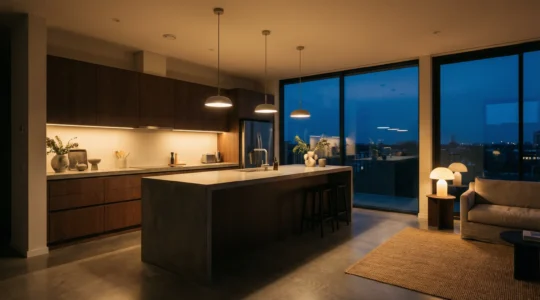
How to Zone Your Lighting Circuits for Open Plan Living?
Great lighting isn’t about the fixtures you choose, but the control infrastructure you build behind the walls. Single-circuit grids create flat, sterile environments; multiple circuits create « scenes. » Planning must happen before the first fix to integrate 5-amp sockets and zoning….
Lire la suite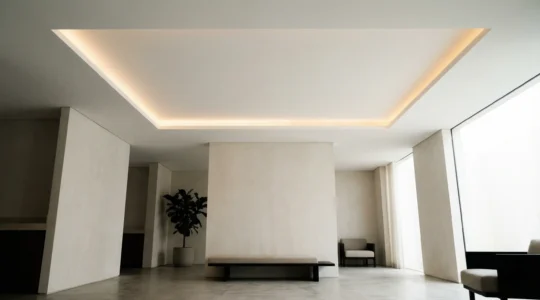
How to Design Shadow Gap Lighting for a Minimalist Ceiling?
A flawless shadow gap relies not on the profile you choose, but on the precise coordination between the dryliner’s boarding sequence and the electrician’s cabling. Thermal expansion between aluminum and gypsum is the primary cause of cracking, requiring reinforced junctions….
Lire la suite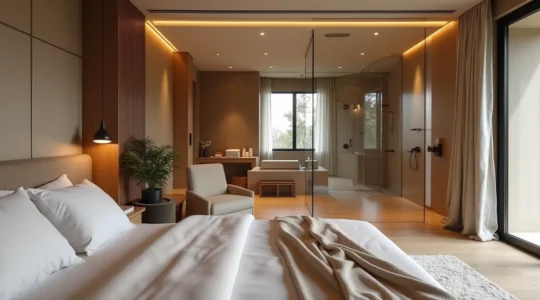
Open-Plan Master Suites: Solving Moisture and Privacy in the En-Suite
A true luxury open-plan suite is an engineered system of comfort, not just an open space lacking walls. Effective moisture control relies on « invisible engineering, » including silent, high-capacity extraction and strategic make-up air. Sensory zoning using smart glass, acoustic insulation,…
Lire la suite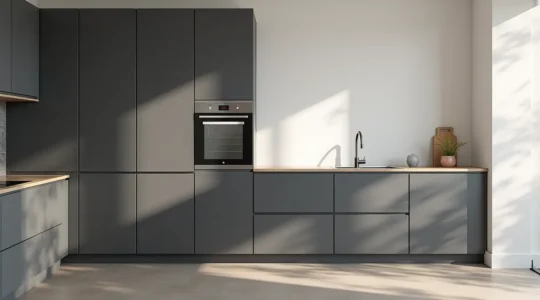
Matte Kitchen Cabinets: How to Prevent Fingerprints on Dark Surfaces?
The secret to spotless matte cabinets isn’t constant cleaning; it’s choosing a surface with superior microsurface technology from the outset. Oils become trapped in the microscopic peaks and valleys of standard matte finishes, making them difficult to remove. Advanced materials…
Lire la suite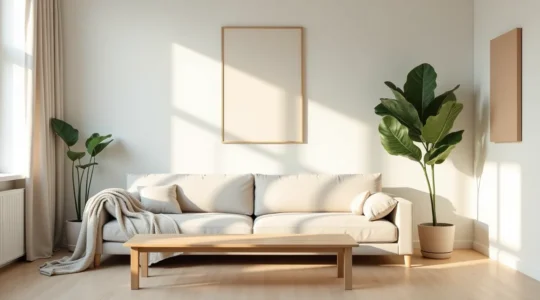
Minimalist Living: How to Hide Clutter in a Family Home
True minimalism in a family home is not about owning less, but about creating smart, low-friction systems that reduce your daily mental load. Scientific research shows a direct link between a cluttered home environment and elevated levels of the stress…
Lire la suite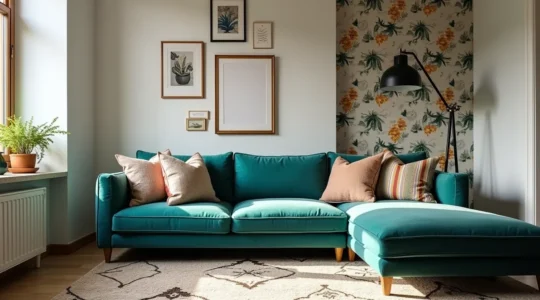
Maximalism in Small Spaces: How to Layer Without Cluttering
The secret to successful maximalism isn’t acquiring more, but applying rigorous compositional discipline. Treat your space like a gallery, with every object earning its place through a strict « curator’s edit. » Mastering a cohesive color story and varying pattern scale is…
Lire la suite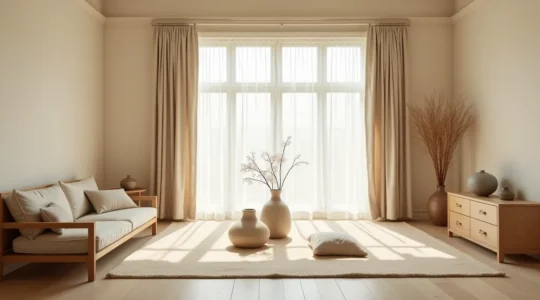
How to Adapt the Japandi Trend for North-Facing British Rooms?
Contrary to popular belief, making a north-facing British room feel warmer isn’t about painting it stark white; it’s about embracing the moody light with complex, warm-toned neutrals and rich textures. Swap cold, brilliant whites for nuanced neutrals with red or…
Lire la suite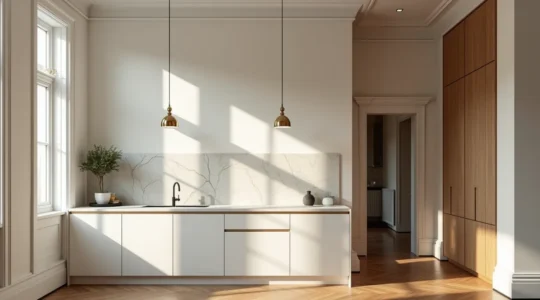
Which High-End Finishes Actually Add Value to a London Flat?
In the London market, the highest return on investment comes not from spending the most, but from spending the smartest on details that signal uncompromising quality. « Touchpoint » elements like taps and handles have a disproportionate impact on a buyer’s perception…
Lire la suite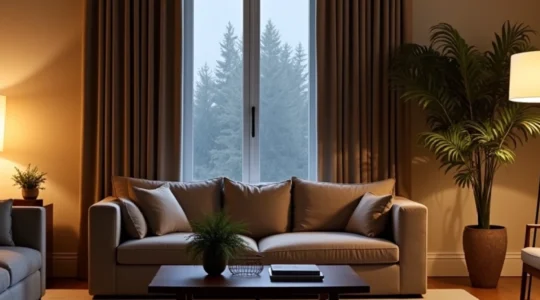
Illuminate your space with modern and classic living room lamp designs
Lighting plays a crucial role in shaping the ambiance and functionality of any living space. From classic Tiffany lamps to cutting-edge smart lighting solutions, the evolution of living room illumination reflects changing aesthetics, technological advancements, and lifestyle needs. Evolution of…
Lire la suite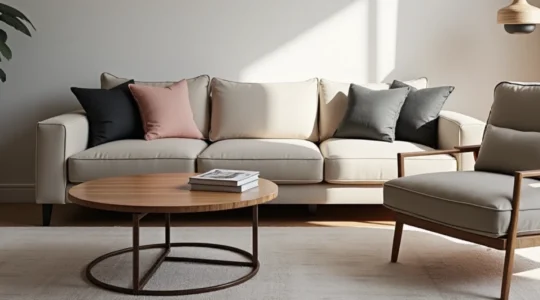
How can you select the perfect design armchair for your living space?
Choosing the right design armchair for your living space is a pivotal decision that can significantly impact the overall aesthetic and comfort of your room. A well-selected armchair serves as both a functional seating option and a statement piece, elevating…
Lire la suite