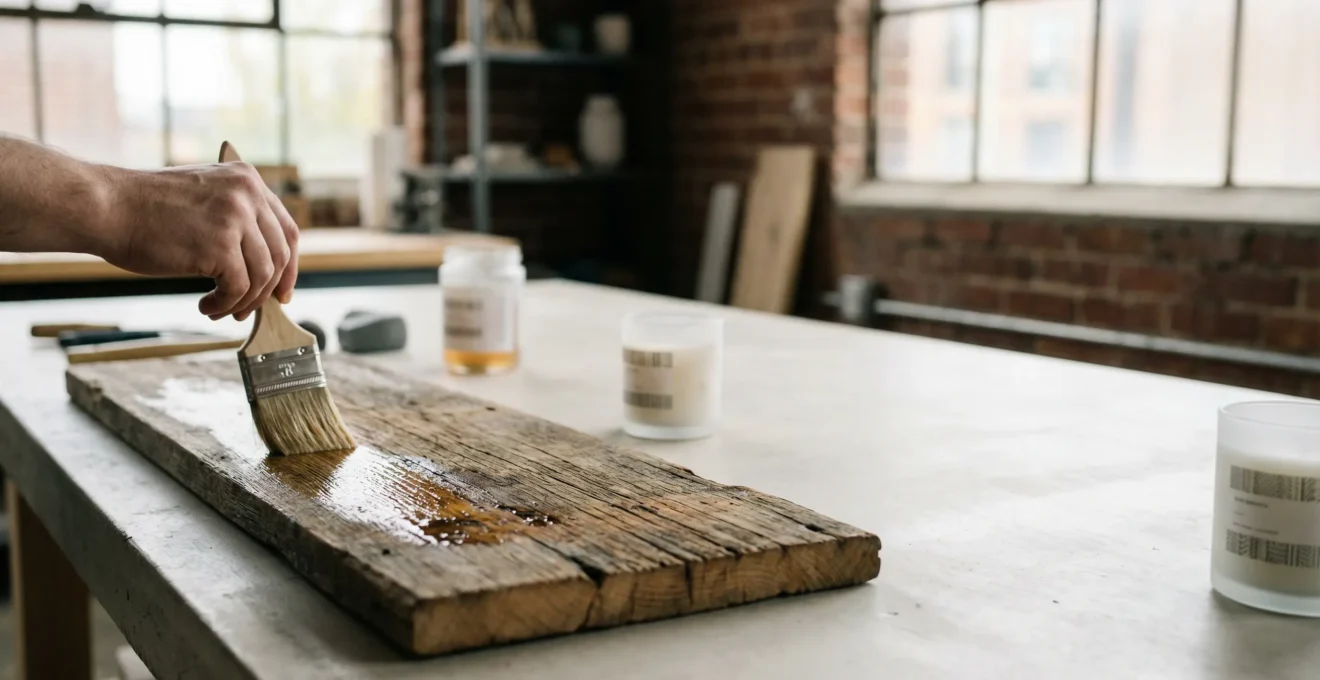
The secret to safe upcycling isn’t just sanding; it’s encapsulation.
- Methyl Bromide (MB) stamps on pallets indicate a toxic gas hazard that requires specific handling or avoidance.
- Standard oils and waxes are permeable; only film-forming finishes like polyurethane or shellac effectively block off-gassing.
Recommendation: Always inspect end-grain stamps before collecting wood and use a barrier coat primer on any industrial timber with unknown provenance.
There is an undeniable allure to the rugged patina of a scaffold board table or the industrial chic of a pallet wood headboard. However, for many DIY enthusiasts, that aesthetic dream can quickly turn into a health anxiety nightmare. The concern is valid: industrial wood often led a harsh previous life, soaking up chemicals, pesticides, and oil spills that don’t simply disappear with a quick sanding.
While the common advice is often to “just sand it down and oil it,” this approach can actually be dangerous. Sanding releases toxic particulate matter into the air, and penetrating oils offer zero barrier against chemical off-gassing. From methyl bromide fumigation to hidden woodworm larvae, the risks are invisible but potent. This isn’t just about decoration; it is about forensic safety.
But if the real danger lies deep within the grain, does that mean we must abandon reclaimed timber? Not necessarily. The solution lies in understanding the history of the wood and applying the correct “encapsulation” strategy rather than a simple finish. This guide will walk you through the detective work required to identify safe timber and the specific sealing protocols needed to bring it indoors without bringing the toxins with it.
To help you navigate these safety protocols and restoration techniques, here is a structured guide to mastering the art of safe upcycling.
Table of Contents: Safe Upcycling Guide
- Why Pallets Marked ‘MB’ Are Unsafe for Indoor Furniture
- How to Remove Oil Stains from Reclaimed Scaffold Boards
- Varnish vs Wax: Which Seals Contaminants Better?
- The Woodworm Risk in Reclaimed Timber You Can’t See
- How to Find Clean Industrial Waste at Wood Recycling Centres
- How to Repair Rattan Furniture Instead of Replacing It
- Vintage 1960s vs New Production: Which Is Better Quality?
- Investing in Icons: Which Designer Chairs Hold Their Value Best?
Why Pallets Marked ‘MB’ Are Unsafe for Indoor Furniture
The first line of defense in upcycling safety is reading the “license plate” of the wood. Pallets, in particular, carry a stamping system that reveals their treatment history. The most critical marker to watch for is “MB,” which stands for Methyl Bromide. This powerful pesticide was widely used to fumigate wood to prevent the spread of invasive insects across borders. However, it is a neurotoxin and an ozone-depleting substance. Unlike heat treatment, which is physical, chemical fumigation leaves a residue that can off-gas over time, especially in warm indoor environments.
Working with these pallets poses immediate risks during the construction phase. Cutting or sanding MB-treated wood releases treated sawdust that can be inhaled or absorbed through the skin. This isn’t a theoretical risk; research indicates that pallet-related accidents and handling issues are significant, with over 30,000 emergency room visits recorded in specific observation periods. For an indoor dining table or a child’s bedframe, an MB pallet is simply not a viable candidate, regardless of how much sealer you apply.
To visualize what you are looking for, examine the texture and markings carefully. The chemical treatment often coincides with older, more weathered wood that retains its rough, industrial character.
Understanding these markings is the only way to ensure the raw material is safe before you bring it into your workshop. A quick audit of the stamps can save you from toxic exposure.
Safety Audit: Identifying Pallet Markings
- Isolate the Stamp: Look for the ISPM 15 stamp burned into the wood, which indicates international shipping compliance.
- Verify Heat Treatment: Identify ‘HT’ stamps (Heat Treated) – these are safe to use as no chemicals are involved in the treatment process.
- Red Flag Check: Avoid any pallets marked ‘MB’ (Methyl Bromide) – this potent pesticide is linked to health problems and ozone layer depletion.
- Dryness Check: Check for ‘KD’ stamps (Kiln Dried) which are also safe for DIY projects.
- Color Warning: Never use colored/painted pallets (blue CHEP, red PECO) as they are rental pallets often treated with fungicides for longevity.
How to Remove Oil Stains from Reclaimed Scaffold Boards
Scaffold boards are prized for their length and thickness, making them ideal for table tops. However, their previous life on construction sites means they are often impregnated with hydraulic fluids, motor oil, or grease. The problem with oil is not just aesthetic; it creates a chemical adhesion failure. If you attempt to apply a water-based polyurethane or a varnish over an oil stain, the finish will eventually bead, peel, or bubble because it cannot bond to the contaminated fibers. You cannot simply seal over oil; you must extract it.
For deep, stubborn stains, a surface wash is insufficient. The oil has soaked into the cellular structure of the wood. A proven method involves using a poultice—a mixture of an absorbent powder and a solvent—to physically draw the oil out as it dries. This capillary action lifts the contaminant from the depths of the grain to the surface where it can be scraped away. However, modern technology offers biological alternatives as well.
Bio-Enzymatic Solutions for Industrial Stains
Professional floor restoration specialists report that microbial oil-ingesting products like Ameripolish work by using single-celled microorganisms that digest oil-based contaminants over several weeks without damaging or discoloring the surface, making them a viable non-toxic option for reclaimed wood prep.
Whether you choose a chemical poultice or a bio-enzymatic cleaner, patience is key. Rushing this step will compromise your final seal.
Varnish vs Wax: Which Seals Contaminants Better?
The “natural look” trend often pushes DIYers toward beeswax or penetrating oils. While these finishes are beautiful, they are functionally useless against toxins. Penetrating finishes soak into the wood, occupying the same space as potential contaminants, but they do not create a solid “lid” on top. They remain permeable to air, meaning that volatile organic compounds (VOCs) or odors from the wood can still off-gas into your home.
To truly “block” toxins, you need a film-forming finish. These products create a distinct layer on top of the wood surface. Shellac, specifically standard BIN primer based on shellac, is the gold standard for blocking odors and locking in stains, often used in fire restoration. Polyurethane is the modern equivalent for durability. The goal is encapsulation: creating a hermetic seal that prevents anything from leaving the wood.
The following table compares the barrier efficacy of common finishes to help you make the safe choice for industrial timber.
As illustrated in this comparison, derived from a comprehensive analysis of natural finishes, the trade-off for safety is often the “raw” feel of the wood.
| Finish Type | Barrier Level | VOC Permeability | Best Use Case | Reapplication |
|---|---|---|---|---|
| Wax (e.g., Renaissance Wax) | Low – surface only | High – allows off-gassing | Decorative pieces, known-clean wood | Every 1-5 years |
| Oil (Danish, Tung, Linseed) | Low-Medium – penetrating | Medium-High | Food-safe surfaces, furniture maintenance | Every 1-2 years |
| Shellac/BIN Primer | High – film-forming | Very Low – vapor barrier | Odor/toxin sealing, fire restoration | Single application |
| Polyurethane | High – durable film | Low | High-traffic areas, floors | Every 3-5 years |
| Epoxy Resin | Maximum – encapsulation | None – complete seal | Heavily contaminated industrial wood | Permanent |
The Woodworm Risk in Reclaimed Timber You Can’t See
Chemicals aren’t the only hidden passengers in reclaimed wood. The Common Furniture Beetle, widely known as woodworm, is a pervasive threat in timber that has been stored in damp, unheated environments—typical conditions for pallets and scaffold boards. The danger is that the damage you see (the flight holes) represents the end of the cycle. The active larvae can chew through the interior of the wood for years without breaking the surface.
Bringing a piece of infested wood into your home isn’t just bad for that specific table; it risks cross-contamination to your floorboards, joists, and other antique furniture. Active infestations are difficult to spot because the larvae operate silently. Data from pest control studies indicates that woodworm larvae can live 2 to 5 years hidden inside wood before emerging as beetles. This latency period makes visual inspection tricky.
Before bringing any reclaimed piece indoors, it should undergo a period of “quarantine” in a garage or shed. Setting up a monitoring station allows you to check for “frass”—the tell-tale dust that indicates active boring.
If you confirm an infestation, treatment with a boron-based woodworm killer is necessary before any sealing or finishing takes place.
How to Find Clean Industrial Waste at Wood Recycling Centres
The safest way to handle toxins is to avoid them entirely by sourcing “clean” industrial waste. Not all pallets are created equal. A pallet used to transport 50-gallon drums of chemicals carries a totally different risk profile than a crate used to ship dry glass panes or computer servers. When visiting wood recycling centers or scavenging, profiling the previous industry is a crucial skill.
Look for custom-sized crates rather than standard pallets. Standard pallets (Euro pallets) circulate in a global pool and are reused thousands of times for random goods. Custom crates are often “single-use” packaging made for specific machinery or dry goods, meaning they haven’t been exposed to years of random spills. Engaging with the staff at recycling centers can also reveal the wood’s provenance.
However, skepticism is a healthy trait for an upcycler. Even wood that appears clean can harbor invisible residues.
As Candice Miller warns in an interview with Earth911 :
Wood is very porous, and you’re really never sure if you’ve gotten everything out of there. The same thing with sealing or painting it. I don’t think the effectiveness of that has been totally proven yet, either.
– Candice Miller, University of Illinois Extension Program
How to Repair Rattan Furniture Instead of Replacing It
Expanding the scope of upcycling beyond heavy timber, rattan offers a different challenge. Unlike the dense heartwood of scaffold boards, rattan is a vine that becomes brittle when it dries out. The safety concern here is less about toxins and more about structural failure. Sharp, snapped rattan strands can cause injury, and repairing them requires restoring the material’s flexibility before weaving.
The mistake many restorers make is trying to weave or glue dry, brittle rattan. It simply snaps under tension. The “hydration protocol” involves cleaning the piece and then feeding the fibers with a mixture of boiled linseed oil and turpentine. This penetrates the dried fibers, restoring their elasticity. Only once the material is pliable can safe, lasting repairs be made.
Patina Matching with Specialized Finishes
Renaissance Wax has become the preferred finish for vintage furniture repair matching because it is completely colorless and does not penetrate wood fibers, staying on the surface. This prevents the new repair sections from darkening differently than the aged original material, making repairs nearly invisible while providing moisture protection.
Vintage 1960s vs New Production: Which Is Better Quality?
When upcycling or restoring furniture, one might wonder if the effort is worth it compared to buying new. In the case of mid-century pieces versus modern reproductions, the material science favors the vintage. Furniture produced in the 1960s often utilized old-growth timber—teak and rosewood harvested from natural forests. This wood grew slowly, resulting in a much tighter grain density and higher oil content than the fast-grown plantation timber used today.
This density equates to durability. A vintage teak sideboard has a structural integrity that resists dents and scratches far better than a modern equivalent. Furthermore, the veneers used in the mid-20th century were significantly thicker (often 1.5mm to 3mm) compared to the paper-thin micro-veneers (0.6mm) on modern mass-market furniture. This thickness allows for sanding and refinishing multiple times, giving the piece a lifespan measured in centuries rather than decades.
Restoring these pieces is not just an aesthetic choice; it is the preservation of a material quality that is increasingly rare and expensive to replicate in new manufacturing.
Investing in Icons: Which Designer Chairs Hold Their Value Best?
The intersection of safety, restoration, and economics culminates in the market for iconic design. Not all upcycling projects are destined for the workshop; some are destined for the auction block. Understanding which pieces warrant the time and expense of a high-end, toxin-blocking restoration is crucial. The market favors “provenance” and specific wood species that are now protected.
Furniture made from Brazilian Rosewood (Dalbergia nigra) prior to the CITES ban is essentially a finite resource. Because it is illegal to harvest or trade new timber of this species without strict permits, existing vintage pieces are irreplaceable assets. A specialized restoration that preserves the original finish—or safely encapsulates a damaged one without altering the color—can significantly increase the asset’s value.
Wood Species and Value Retention
Designer chairs made with Brazilian Rosewood (Dalbergia nigra) before the CITES ban command the highest market premiums because the species is now protected under international law, making authentic reproduction legally impossible. This scarcity factor, combined with the wood’s distinctive grain and rich coloring, has transformed pre-ban rosewood furniture into appreciating assets that outperform many traditional investments.
For the upcycler, identifying these woods means treating the project with archival respect, ensuring that any sealing or cleaning done today does not diminish the historical value tomorrow.
Key Takeaways
- Identify and avoid “MB” stamped pallets to prevent neurotoxin exposure.
- Use film-forming finishes (Shellac, Polyurethane) to block off-gassing; oils are insufficient.
- Quarantine reclaimed wood to monitor for hidden woodworm infestation before bringing it indoors.
Start your next project by strictly auditing your wood sources and choosing the right barrier finish to protect your home and health.