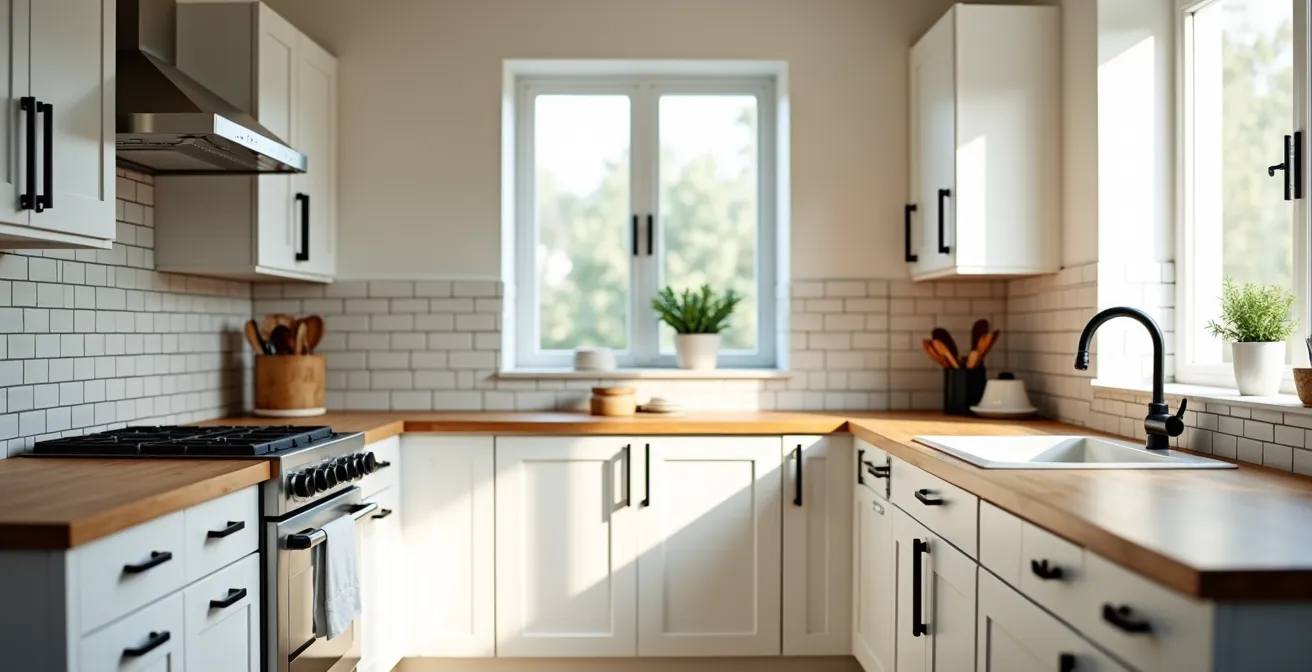
Achieving a high-quality family kitchen for under £10,000 is not about cutting corners, but about a smart budget allocation strategy.
- Labour is your biggest variable cost; strategic choices in materials and layout can drastically reduce it.
- Prioritise investment in high-use, high-impact areas like worktops and lighting, while saving on elements like cabinet carcasses.
Recommendation: Think like a project manager: focus on the lifecycle cost and long-term function of every component, not just the initial price tag.
The £10,000 figure for a kitchen renovation can feel like an impossible puzzle. It sits in an awkward middle ground: more than a simple cosmetic refresh, but not enough for a no-holds-barred luxury overhaul. For families, the challenge is even greater. You need a space that’s not just beautiful, but also durable, easy to clean, and functional enough to handle the chaos of daily life. The internet is full of advice that often boils down to two things: do all the work yourself or buy the cheapest of everything. This approach often leads to burnout or a kitchen that looks tired within a few years.
But what if the key wasn’t simply about saving money, but about spending it more intelligently? The secret to a successful £10,000 renovation lies in adopting the mindset of a project manager. It’s a game of strategic allocation—knowing precisely where to invest for maximum impact and longevity, and where you can make savvy savings without compromising on quality. This isn’t about compromise; it’s about making informed trade-offs that prioritise what truly matters in a busy family home.
This guide will walk you through that strategic process. We’ll deconstruct outdated design rules, tackle the practicalities of surviving the renovation itself, and analyse the critical components—from cabinets and lighting to worktops and flooring—through the lens of durability, value, and long-term family use. We will explore how to achieve a high-end, bespoke feel without the bespoke price tag, ensuring every pound of your budget works as hard as possible to deliver a kitchen that serves your family for years to come.
This article provides a detailed roadmap for planning your kitchen renovation. Below is a summary of the key strategic areas we will cover to help you navigate your project successfully and stay on budget.
Summary: Your Strategic Guide to a £10,000 Kitchen Renovation
- Why the ‘Kitchen Triangle’ Is Outdated for Modern Families
- How to survive a Kitchen Renovation Without a Sink for 4 Weeks
- Matt vs Gloss Cabinets: Which Is Easier to Clean with Kids?
- The Lighting Error That Casts Shadows on Your Chopping Board
- When to Buy Ex-Display Appliances to Save 40%
- Why Porcelain Resists Stains Better Than Natural Stone
- Why Bespoke Joinery Adds More Value Than Freestanding Furniture
- Porcelain Tiles: The Best Choice for High-Traffic Family Kitchens?
Why the ‘Kitchen Triangle’ Is Outdated for Modern Families
For decades, kitchen design was governed by the ‘work triangle’—an imaginary line connecting the sink, the hob, and the refrigerator. The goal was to make a single cook’s journey between these three points as efficient as possible. But modern family life has rendered this concept largely obsolete. Today’s kitchen is rarely the domain of a single person. It’s a multifunctional hub where one person might be cooking, another making a coffee, a child doing homework at the island, and someone else grabbing a snack from the fridge. A rigid triangle simply creates traffic jams and frustration.
The modern, effective approach is ‘task zoning’. Instead of focusing on three points, you design specific zones for distinct activities. This might include a ‘prep zone’ with the sink, bins, and ample counter space; a ‘cooking zone’ with the hob and oven; a ‘consumables zone’ with the fridge and pantry; and a ‘social zone’ with seating and a coffee machine. This model allows multiple people to use the kitchen simultaneously without getting in each other’s way. For a family, this is a game-changer, transforming the kitchen from a production line into a collaborative, functional living space.
When planning your layout, think about your family’s daily routines. Where does the chaos happen? By creating dedicated zones for preparing breakfast, packing lunches, or post-school snacks, you design a workflow that serves your real life, not an outdated theoretical model. This strategic thinking costs nothing but has a massive impact on the kitchen’s long-term usability.
How to survive a Kitchen Renovation Without a Sink for 4 Weeks
The most dreaded part of any kitchen renovation is the period of disruption. Living without a functional kitchen, especially a sink, can feel like a domestic nightmare for a family. However, with a project manager’s foresight, you can create a temporary setup that makes the process entirely manageable. The key is to establish a well-equipped ‘survival station’ in another room, like a dining room or utility area. This isn’t just about a microwave in the corner; it’s about recreating a mini-kitchen workflow.
Your station should include a portable induction hob, an electric kettle, a toaster oven or microwave, and a large water dispenser with a spigot to serve as your temporary tap for drinking and rinsing. A crucial element, often overlooked, is a washing-up station. Use two large washing-up bowls: one for soapy water and one for rinsing, placed in a bathtub or shower. Stock up on disposable (ideally compostable) plates and cutlery to minimise daily washing. This temporary kitchen allows you to prepare simple meals, reducing the reliance on expensive takeaways and maintaining a sense of normalcy.
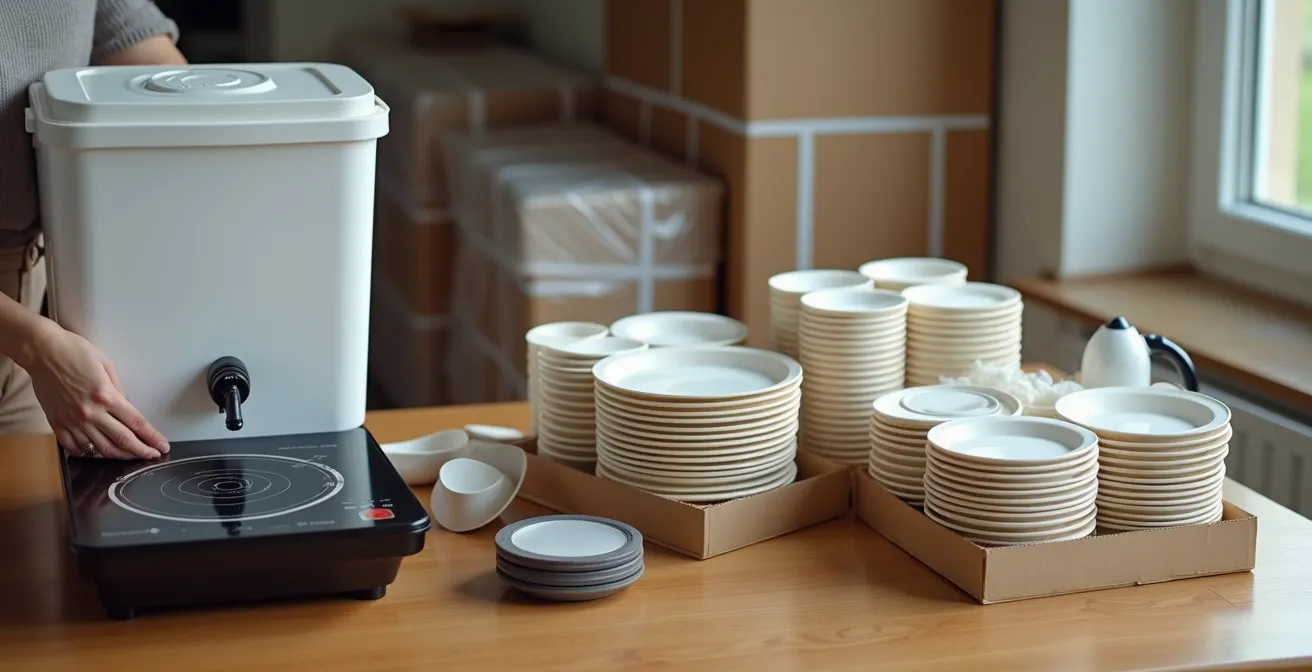
As this setup shows, organisation is everything. Use clearly labelled boxes for essential pantry items, utensils, and cleaning supplies. One homeowner who completed a full renovation for under $10,000 credited their survival to a well-organised temporary station with a mini-fridge and toaster oven, allowing them to weather four months of DIY work without breaking their budget on eating out. Planning this phase is as important as planning the final design.
Matt vs Gloss Cabinets: Which Is Easier to Clean with Kids?
Cabinet doors are the face of your kitchen, and the choice between a matt and gloss finish is a major decision point. For a family, the primary concern is often practicality: which surface will best withstand sticky fingerprints, smudges, and the general wear and tear of daily life? While high-gloss cabinets can look stunning and reflect light in smaller kitchens, they are notoriously unforgiving. Every fingerprint, water spot, and tiny scratch shows up, requiring constant wiping to look its best.
Matt finishes, particularly modern premium laminates and textured wood grains, are far more practical for a busy family. Their non-reflective surface is excellent at hiding minor smudges and fingerprints, reducing your daily cleaning burden. While some believe matt surfaces are harder to clean if a stain sets, modern materials are highly durable and can be wiped down easily. Ultimately, the best choice depends on your tolerance for cleaning versus your desire for a particular aesthetic.
One powerful budget strategy is cabinet refacing. If your existing cabinet carcasses are in good condition, you can simply replace the doors and drawer fronts. As Paddy Kearney of ImproveIt Home Remodeling notes, this can be a significant saving:
Cabinet refacing can save $10,000 or more compared to full replacement
– Paddy Kearney, ImproveIt Home Remodeling
This approach allows you to get a brand-new look and a more practical finish without the cost and disruption of a full cabinet tear-out. The table below offers a clear comparison to guide your decision.
| Finish Type | Fingerprint Resistance | Scratch Visibility | Cleaning Ease | Best For |
|---|---|---|---|---|
| Matt Laminate | High | Low | Easy | Busy families |
| Gloss Lacquer | Low | High | Moderate | Adult households |
| Textured Wood Grain | Very High | Very Low | Very Easy | Families with kids |
| Premium Matt (Fenix) | Very High | Low | Very Easy | High-traffic kitchens |
The Lighting Error That Casts Shadows on Your Chopping Board
One of the most common and frustrating mistakes in kitchen design is relying on a single, central ceiling light. This creates a critical functional flaw: when you stand at the counter to chop vegetables or read a recipe, your own body blocks the light source, casting a shadow directly over your workspace. This not only makes tasks more difficult but can also be a safety hazard. A successful kitchen lighting plan isn’t about one bright light; it’s about building layers of light for different purposes.
The three essential layers are: Ambient (the overall illumination from a central fixture), Task (focused light for work areas), and Accent (decorative light to highlight features). For a family kitchen on a budget, the most crucial and transformative investment is task lighting. Under-cabinet LED strips are the single most effective way to eliminate countertop shadows. They provide bright, direct light exactly where you need it for food prep, reading, and cleaning. This is not a luxury item; it’s a functional necessity, and a surprisingly affordable one. An analysis shows the typical cost for installing under-cabinet LED strips ranges from $200 to $600, a small price for a massive improvement in daily usability.
By layering your lighting, you create a space that is both functional for cooking and atmospheric for dining or socialising. You gain full control over the mood and utility of your kitchen, making it a more pleasant and efficient space at all times of the day.
Your Action Plan: Layered Kitchen Lighting on a Budget
- Install plug-in LED strips under cabinets for zero electrician costs.
- Add battery-powered puck lights inside dark pantry corners for flexible task lighting.
- Replace a single central fixture with an affordable track lighting system to direct light towards multiple work zones.
- Choose bulbs with a high CRI (Color Rendering Index) of 90+ for prep areas to see the true colour of food.
- If using an island, position pendant lights 30-36 inches above the surface for optimal, glare-free task lighting.
When to Buy Ex-Display Appliances to Save 40%
Appliances can consume a significant portion of a £10,000 budget, but this is an area where strategic shopping can yield huge savings. The key is to avoid paying full retail price. One of the best tactics is to hunt for ex-display or “open-box” models. These are appliances that have been on the showroom floor or returned by a customer, often without ever being used. They typically come with a full warranty but are sold at discounts of up to 40% or more. The best time to look is in the autumn, particularly September and October, when manufacturers release new models and retailers are eager to clear out last year’s stock.
Building a good relationship with managers at local independent appliance stores can also pay dividends. Let them know what you’re looking for, and they may alert you when a suitable ex-display model becomes available. Beyond ex-display, look at a brand’s own outlet store online or consider reputable second-hand sellers for high-end brands. This “value engineering” approach allows you to access better quality appliances than your budget might otherwise allow.
Case Study: Strategic Appliance Shopping Saves Over £1,600
A homeowner looking to renovate their kitchen saved a significant amount on appliances by combining several smart strategies. By sourcing a high-end Thermador cooktop second-hand from Renovation Angel, they saved over £300. They found a Miele dishwasher on a classifieds site like Craigslist for just £140 instead of its £1,400 retail price. By timing these purchases and combining them with IKEA rebate schemes for other items, their total savings on appliances exceeded £2,100. The key was patience and knowing when and where to look.
Remembering that labour is a major cost component is vital. According to the National Kitchen and Bath Association, labour typically accounts for 20%-35% of a total renovation budget. By saving thousands on appliances, you free up critical funds to allocate towards quality installation and other high-impact areas like worktops or joinery, ensuring a professional finish.
Why Porcelain Resists Stains Better Than Natural Stone
The worktop is the hardest-working surface in a family kitchen. It must withstand spills, heat, scratches, and stains from things like red wine, coffee, and felt-tip pens. For years, natural stone like marble or granite was the aspirational choice. However, for a family on a £10,000 budget, natural stone presents two major problems: high initial cost and high maintenance. Natural stone is porous, meaning it can absorb liquids and stain easily if not sealed regularly—a maintenance task easily forgotten in a busy household.
This is where modern porcelain slab worktops offer a superior solution. Porcelain is an engineered material, created by firing minerals at extremely high temperatures. This process makes it virtually non-porous, with a water absorption rate of less than 0.5%. This is the scientific reason it’s so resistant to staining. Spills sit on the surface and can be wiped away easily without leaving a trace. It’s also highly resistant to heat, scratches, and UV light, meaning it won’t fade over time. For a family, this means a beautiful worktop that looks brand new for years with almost zero maintenance.

From a project manager’s perspective, the decision is a clear example of evaluating lifecycle cost, not just purchase price. While a high-quality laminate is the ultimate budget choice, porcelain offers the look of natural stone without the associated long-term costs and worry. As the comparative data in this recent analysis of worktop materials shows, the financial case for porcelain over a decade of use is compelling.
| Material | Cost per sq ft | Annual Maintenance | Stain Resistance | 10-Year Total Cost (30 sq ft) |
|---|---|---|---|---|
| Natural Marble | £130+ | £200 sealing | Low | £5,900+ |
| Porcelain Slab | £60 | £0 | Very High | £1,800 |
| Quality Laminate | £17 | £0 | Moderate | £500 |
| Butcher Block | £55 | £50 oiling | Low-Moderate | £2,150 |
Why Bespoke Joinery Adds More Value Than Freestanding Furniture
When you’re trying to maximise every inch of space in a family kitchen, built-in, bespoke joinery almost always provides more long-term value than freestanding furniture. Freestanding pieces can be charming, but they often create awkward, unusable gaps where dust and clutter accumulate. Custom joinery, by contrast, is designed to fit your space perfectly from wall to wall and floor to ceiling. This creates a seamless, integrated look that not only maximises storage but also makes the room feel larger and more intentional.
The term ‘bespoke’ can sound expensive, but this is where a project manager’s “value engineering” mindset comes in. You don’t need a high-end carpenter to build everything from scratch. One of the most effective strategies for achieving a custom look on a budget is the “IKEA hack” approach. This involves using standard, affordable cabinet carcasses from a supplier like IKEA and pairing them with custom-made fronts from a specialist company. You get the cost-effectiveness and proven hardware of a mass-market system with the premium look and perfect fit of a custom kitchen.
This semi-custom method gives you the best of both worlds. A New York contractor who frequently uses this approach notes its reliability and quality, stating, “The hardware holds up great. I’ve never had a single call-back or complaint about IKEA cabinets.” This strategy allows you to create full-height pantry units, integrated appliance housings, or perfectly fitted banquette seating that adds immense functional and aesthetic value. This is a strategic investment that potential future buyers will notice, as it speaks to a well-planned and thoughtfully executed space.
Key Takeaways
- Adopt a project manager’s mindset: focus on strategic budget allocation, not just cost-cutting.
- Prioritise durable, low-maintenance materials for high-traffic surfaces like worktops (porcelain) and cabinets (matt finish).
- Invest in layered lighting, especially under-cabinet task lighting, as it’s a low-cost change with a high impact on daily usability.
Porcelain Tiles: The Best Choice for High-Traffic Family Kitchens?
The kitchen floor takes more punishment than any other surface in the house. It faces constant foot traffic, dropped utensils, food spills, and frequent cleaning. While porcelain tiles are an outstanding choice for durability and ease of cleaning, it’s wise to consider all options. Porcelain’s hardness makes it incredibly scratch-resistant, but it can be unforgiving when a glass or plate is dropped. It can also be cold and hard underfoot, which may be a consideration if you spend long hours standing.
For families, Luxury Vinyl Tile (LVT) has emerged as a formidable contender. As Clinton Griffith of Cutting Edge Flooring points out, modern manufacturing has transformed the material:
The number one seller in the United States currently is vinyl flooring. They are getting really, really good at making it seem super real.
– Clinton Griffith, Cutting Edge Flooring
LVT offers a softer, warmer surface underfoot, which is more comfortable to stand on and more forgiving to dropped items. It’s also highly durable, water-resistant, and available in incredibly realistic wood and stone effects. The choice between porcelain and LVT is a classic project management trade-off: porcelain offers ultimate scratch resistance, while LVT provides better comfort and impact absorption.
Regardless of the material you choose, smart installation choices can save money and maintenance time. Here are some key considerations for your flooring selection:
- Opt for large-format tiles to reduce the number of grout lines, which are the hardest part to keep clean.
- Always choose a mid-grey or charcoal grout instead of white or cream, as it will look cleaner for much longer.
- If choosing a pattern, a simple stack bond (grid) is cheaper and faster for a tiler to install than a more complex herringbone or chevron pattern.
- Always factor in the hidden costs: adhesive, grout, sealant, the potential need for floor levelling compound, and professional installation fees.
Now, with this strategic framework, you can approach your renovation not as a daunting list of expenses, but as a series of informed decisions. Start planning your project by applying this project manager’s mindset to create a kitchen that is a true, long-lasting investment in your family’s daily life.