
Achieving a five-star hotel bedroom has less to do with high thread counts and more to do with mastering the sensory engineering of tranquility.
- The true luxury of hotel bedding lies in fiber quality and weave, not just an inflated thread count.
- A sophisticated atmosphere is built with layered, dimmable lighting that supports your natural circadian rhythms.
- Acoustic and atmospheric hygiene—from silent fans to non-toxic air—are the invisible foundations of deep rest.
Recommendation: Shift your focus from buying individual luxury items to curating a cohesive sensory system that promotes calm, comfort, and restorative sleep.
The longing for a sanctuary is a modern necessity, especially for professionals navigating high-stress environments. Your master bedroom should be more than just a place to sleep; it should be an escape, a personal retreat that rivals the restorative comfort of a five-star hotel. The common advice often circles around superficial fixes: buy expensive sheets, add more pillows, or paint the walls a calming color. While these elements play a role, they are merely components of a much more sophisticated system.
True hotel-level luxury is not an accident or a simple shopping list. It is a deliberate practice of sensory engineering. It’s a holistic approach that considers every interaction you have with the space, from the tactile sensation of the fabrics and the temperature of the light to the quality of the air you breathe and the acoustic serenity that envelops you. This is the secret that separates a merely beautiful room from one that actively promotes well-being and profound rest.
But if the key isn’t just a high thread count or a designer paint chip, what is it? The answer lies in understanding the underlying principles that boutique hotel designers use to craft these exceptional environments. It’s about making strategic choices in bedding, lighting, acoustics, and organization that work in concert to soothe the nervous system. This guide will deconstruct these professional secrets, empowering you to move beyond aesthetics and become the architect of your own personal sanctuary.
This article provides a detailed roadmap, breaking down the core pillars of hotel-style bedroom design. From the science of luxury textiles to the critical importance of invisible elements like air quality and sound control, you will discover the actionable strategies needed to elevate your space.
Summary: Engineering a Five-Star Bedroom Experience
- Why Thread Count Isn’t the Only Indicator of Luxury Bedding
- How to Layer Lighting for a Relaxing Evening Ambience
- Memory Foam vs Pocket Sprung: Which Mattress Suits Side Sleepers?
- The Storage Mistake That Destroys the Serenity of a Bedroom
- When to Install Soundproofing: Before or After Plastering?
- Why Silent Extraction Fans Are Critical for Sleeping Zones
- When to Paint a Nursery: The 2-Week Cure Rule
- Open Plan Master Suites: How to Solve Moisture Issues from the En-Suite?
Why Thread Count Isn’t the Only Indicator of Luxury Bedding
The most frequent misconception in the pursuit of luxury bedding is the obsession with thread count. Marketing has successfully convinced many that a higher number equals superior quality. However, hotel procurement experts and textile specialists know the truth: beyond a certain point, a high thread count can be a sign of lower quality, thinner threads being twisted together. True luxury lies in the quality of the fiber and the sophistication of the weave.
Instead of chasing four-digit thread counts, focus on the material itself. Long-staple or extra-long staple cotton, such as Egyptian or Pima, has longer, stronger, and smoother fibers. This results in fabric that is not only exceptionally soft but also far more durable and resistant to pilling. Furthermore, the weave dictates the sensory experience. A percale weave offers a crisp, cool, and breathable feel, characteristic of that classic luxury hotel experience. A sateen weave, by contrast, is silkier and smoother to the touch with a subtle sheen. In fact, luxury bedding experts at Yves Delorme confirm that the optimal range is a modest 200-400 for percale and 300-600 for sateen.
To truly replicate the hotel standard, consider these factors:
- Ply: Always choose single-ply threads. Multi-ply yarns often use shorter, weaker fibers twisted together to inflate the thread count.
- Staple Length: Prioritize long-staple cotton for its superior smoothness and durability.
- Weave: Select percale for a crisp, cool feel or sateen for silky softness, based on your personal preference.
- Weight (GSM): A heavier fabric weight (grams per square meter) often indicates a denser, more substantial, and luxurious fabric.
- Finishing: Look for mercerized cotton, a treatment that enhances the fiber’s strength, luster, and ability to hold deep, rich color.
By focusing on this tactile hierarchy of fiber, weave, and finish, you invest in genuine, lasting comfort rather than a misleading number. This is the foundational layer of your bedroom’s sensory experience.
How to Layer Lighting for a Relaxing Evening Ambience
Lighting is one of the most powerful tools in sensory engineering, capable of transforming a stark room into an intimate, relaxing haven. A single, harsh overhead light creates a flat, uninviting atmosphere. Five-star hotels master the art of layered lighting, using multiple sources to create depth, warmth, and functionality. This approach allows you to tailor the room’s ambience to the time of day and your specific needs, signaling to your body that it’s time to unwind.
The strategy involves creating three distinct layers of light: ambient, task, and accent.
- Ambient Light: This is the general, overall illumination, typically from a central ceiling fixture or recessed downlights. The key here is control; installing dimmer switches is non-negotiable for adjusting the brightness from functional daylight to a soft evening glow.
- Task Light: This is focused light for specific activities, primarily reading. Bedside table lamps or wall-mounted sconces provide this. They should be positioned to illuminate your book without causing glare, ideally at shoulder height when you’re sitting up in bed.
- Accent Light: This is the subtle, dramatic layer that adds a high-end feel. It can be achieved with LED strips behind the headboard for a “halo” effect, under the bed frame to make it appear to float, or small spotlights aimed at artwork.
This interplay of light and shadow is what creates a truly sophisticated and serene environment. To support natural sleep cycles, it’s crucial to use bulbs with a warm color temperature—in the 2200K to 2700K range—for all evening lighting. This warm, golden light mimics a sunset and helps promote the production of melatonin, the sleep hormone.
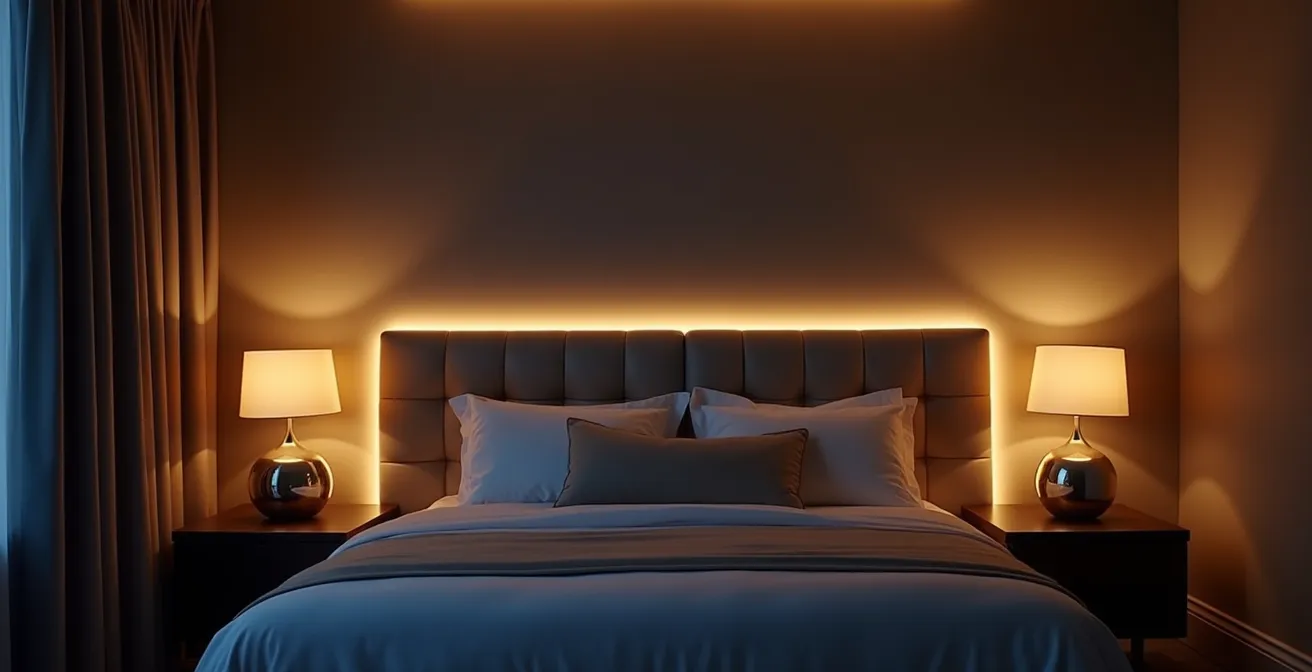
As this visual demonstrates, the combination of different light sources at varying heights and intensities builds a rich, enveloping atmosphere. For ultimate convenience, a master switch near the bed that controls all the room’s lighting is a signature hotel feature, allowing you to transition the space into sleep mode without leaving the comfort of your bed.
Memory Foam vs Pocket Sprung: Which Mattress Suits Side Sleepers?
The mattress is the undeniable foundation of a restorative night’s sleep. While bedding provides the immediate tactile sensation, the mattress delivers the essential support and pressure relief that define true comfort. For side sleepers, the choice is particularly critical, as this position creates significant pressure points at the hips and shoulders. The debate often centers on memory foam versus traditional pocket sprung, but luxury hotels have increasingly moved toward a superior third option: the hybrid mattress.
A hybrid mattress combines the best of both worlds. It typically features a base layer of individually wrapped pocket springs, which provide responsive, targeted support and excellent airflow to prevent overheating. Above this, layers of memory foam or latex offer the body-contouring pressure relief that memory foam is famous for, cradling the shoulders and hips to maintain proper spinal alignment. This combination mitigates the common drawbacks of each individual material: it avoids the heat retention of pure foam and eliminates the potential for pressure points from springs alone.
This detailed comparison highlights why the hybrid model has become the hotel industry standard for accommodating a wide range of sleep preferences, especially for side sleepers.
To complement the mattress, the choice of pillows is equally important for maintaining neck alignment. As designer Jessica Cinnamon notes, a key element of hotel luxury is the tactile indulgence of high-quality pillows. She points out, “The fullest and fluffiest pillows are generally made with 100 percent duck or goose down for that ultra soft comfort.” A combination of a firm, supportive pillow at the base and a softer, down-filled one on top allows for customizable support. This layered approach to the entire sleep surface—mattress, topper, and pillows—is a core principle of engineering five-star comfort.
The Storage Mistake That Destroys the Serenity of a Bedroom
The single biggest mistake that shatters the tranquility of a bedroom is a lack of strategic, frictionless storage. A serene environment is not simply one that is tidy; it’s one that is effortlessly tidy. When there is no designated place for everyday items—the book you’re reading, your phone, your watch, the clothes for tomorrow—clutter inevitably accumulates, creating visual noise and a low-grade sense of stress. Hotel rooms feel serene because they are designed for transient living, with intuitive systems for managing belongings.
Replicating this requires shifting your mindset from “hiding things” to creating a system of “frictionless flow.” This means designing designated “landing spots” for items as you move through your daily routines. Instead of a chair that becomes a secondary closet, install a sleek luggage rack or a valet bench. Instead of a nightstand that overflows with clutter, use a minimalist C-table for the one or two items you need at hand. The goal is to make putting things away as easy as putting them down.
This philosophy extends inside closets and drawers. Hotels keep closets feeling luxurious by not over-stuffing them; maintaining a 75% capacity allows for easy access and a sense of order. Drawer dividers are a simple but transformative tool for preventing a jumble of smaller items. Finally, the auditory component of storage is crucial. The gentle click of soft-close hardware on drawers and cabinets, versus a harsh slam, is a subtle but powerful contributor to a room’s overall acoustic hygiene and peacefulness.
Action Plan for Frictionless Storage
- Identify Contact Points: List all surfaces that currently attract clutter (e.g., nightstand, dresser top, floor, that one chair). These are your “hotspots.”
- Collect and Inventory: Gather all items that lack a designated home (e.g., half-read books, charging cables, discarded jewelry, tomorrow’s outfit).
- Assess for Coherence: Confront your current system. Does finding your keys or putting away your watch induce a micro-moment of stress or a feeling of calm?
- Identify Serenity Killers: Spot the elements that create visual noise (visible cable nests, overflowing bins) and distinguish them from “calm keepers” (a clear valet tray, an empty surface).
- Create an Integration Plan: Implement a three-tiered solution. First, add designated landing spots for daily items. Second, purge or relocate anything that doesn’t belong. Third, prioritize upgrading to soft-close hardware on your most-used drawers.
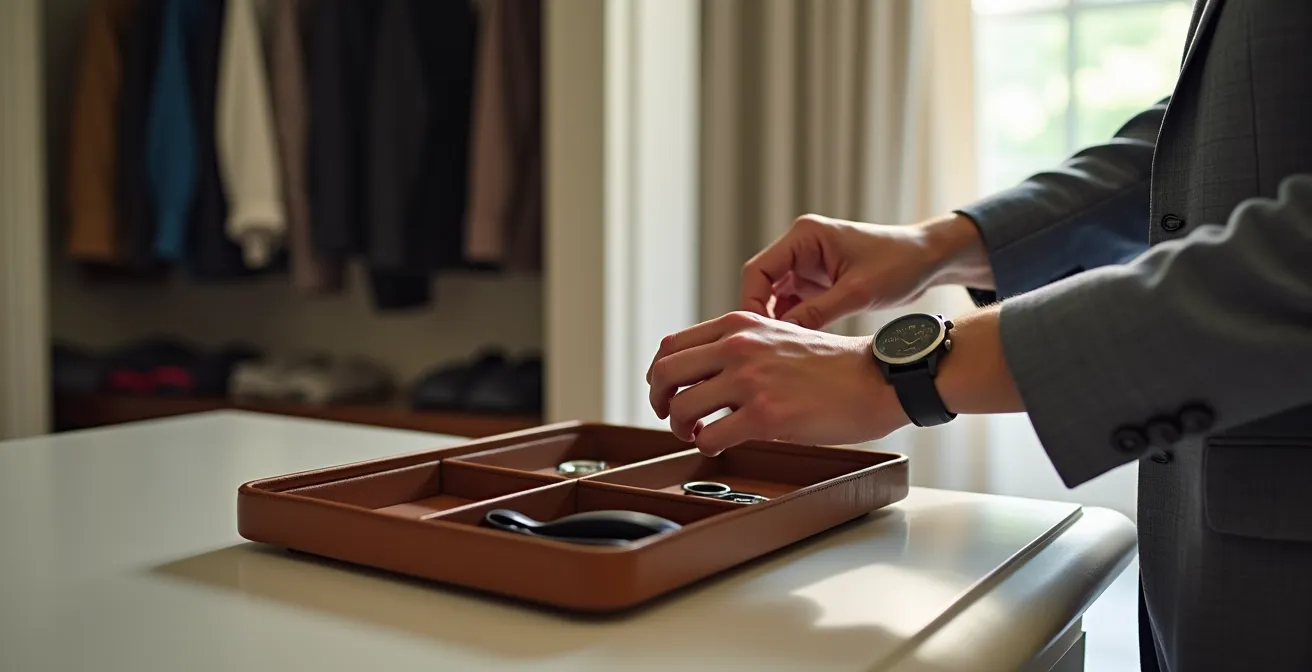
By designing these intentional systems, you remove the daily friction that leads to clutter. You create rituals of organization, as shown in the simple, mindful act of placing a watch on a valet tray. This is the secret to maintaining a perpetual state of calm.
When to Install Soundproofing: Before or After Plastering?
One of the most profound luxuries a hotel room offers is silence. This isn’t an accident; it’s the result of meticulous acoustic engineering designed to isolate you from the outside world. For homeowners seeking to create a true sanctuary, soundproofing is not a luxury—it’s a necessity. The most common question is one of timing: can effective soundproofing be added later, or must it be done during construction? The answer determines the level of silence you can achieve.
For maximum effectiveness, the most powerful soundproofing solutions must be installed before plastering. This is because they work by decoupling the wall structure and adding mass, two things that are impossible to do once the walls are finished. For example, resilient channels are metal furring strips that separate the plasterboard from the wall studs, creating an air gap that significantly deadens sound vibrations. Similarly, mass-loaded vinyl (MLV) is a heavy, dense material that is stapled directly to the studs to block airborne sound waves. Layering these with double sheets of acoustic plasterboard creates a formidable barrier. As professional acoustic consultants confirm that a ‘Level 5 hotel quiet’ environment is primarily achieved with this type of pre-plaster installation.
However, if you are retrofitting an existing room, significant improvements are still possible:
- Doors: Replace hollow-core doors with solid-core versions (with a high Sound Transmission Class or STC rating) and add acoustic seals around the frame.
- Windows: If replacement isn’t an option, heavy, multi-layered blackout curtains with thermal and acoustic properties can absorb a surprising amount of noise.
- Walls: Acoustic wall panels, which can be disguised as artwork or feature walls, can be installed on top of existing plaster to absorb echo and dampen sound.
While retrofitting can greatly enhance a room’s acoustic hygiene, the gold standard of silence is built into the walls from the start. Planning for soundproofing during a renovation or build is the single most effective investment in long-term tranquility.
Why Silent Extraction Fans Are Critical for Sleeping Zones
In the hierarchy of sensory engineering, air quality and acoustic hygiene are intertwined, especially in master suites with en-suite bathrooms. A standard, noisy bathroom extractor fan is a major disruptor of tranquility. Its loud drone can prevent you from falling asleep or jolt you awake. This is why high-end hotels invest in a seemingly invisible but critical piece of technology: the silent extraction fan.
The goal is to achieve an ambient noise level that is functionally unheard. Acoustic specialists aim for fan noise to be below 1.0 sones, a measurement of perceived loudness. A typical residential fan can operate at 2.0 to 4.0 sones, which is disruptive in a quiet sleeping environment. Achieving near-silence requires moving beyond the standard off-the-shelf fan mounted directly in the ceiling.
Case Study: Hotel Ventilation Strategies for Uninterrupted Sleep
Luxury hotels often utilize powerful inline fans. These units are located away from the room itself—in the ceiling void, attic, or a service closet—and connected to the bathroom vent via insulated ducting. This physical separation is the key to eliminating motor noise from the living space while maintaining superior air extraction. These systems are often designed to run continuously at a very low, inaudible speed, with humidistat sensors that automatically ramp up the power when they detect a rise in moisture from a shower. This proactive approach prevents any moisture or odor buildup while preserving the room’s pristine “hotel fresh” scent and, most importantly, the acoustic serenity required for optimal sleep.
This strategy offers a dual benefit. First, it ensures the bedroom remains an acoustically pure sanctuary, free from the mechanical hum that plagues so many homes. Second, by efficiently and continuously managing moisture, it protects the significant investment made in luxury bedding, upholstered headboards, and custom joinery from the damaging effects of humidity and the potential for mildew. A silent, powerful extraction system is not just a bathroom accessory; it’s a critical component of a healthy, peaceful sleeping zone.
When to Paint a Nursery: The 2-Week Cure Rule
While this principle is often discussed in the context of a nursery, its importance extends to any bedroom renovation, especially for health-conscious adults. The “new paint smell” is actually the off-gassing of Volatile Organic Compounds (VOCs), chemicals that can impact air quality and, by extension, sleep quality. Creating a five-star sanctuary means ensuring the air you breathe is as clean and pure as possible. This requires a strategic “commissioning” process for any newly decorated room, governed by the 2-week cure rule.
Even low-VOC or zero-VOC paints require time to cure fully. During this curing period, they release various compounds into the air. While the levels are much lower than in traditional paints, they are not zero. Allowing a full two weeks between the final coat of paint and sleeping in the room is a critical health and safety measure. In fact, environmental health studies show that a proper 2-week curing period can reduce the concentration of airborne VOCs by up to 90%. During this time, the room should be ventilated as much as possible, ideally with windows open and an air purifier running.
This commissioning process should also apply to other new items that can off-gas, such as mattresses, carpets, and furniture. A professional timeline for preparing a healthy sleeping environment looks like this:
- Weeks 3-4 Before Use: Complete all painting and allow the room to air out.
- Week 2 Before Use: Install new furniture, carpets, and the mattress. Keep the room well-ventilated and run an air purifier with a carbon filter to capture chemicals.
- The Final Week: Consider a “bake-out” by heating the room to accelerate any remaining off-gassing, followed by a thorough flush of fresh air.
- Ongoing: Prioritize materials with certifications like Greenguard Gold (for low chemical emissions) and OEKO-TEX (for textiles tested for harmful substances) to maintain long-term air quality.
This deliberate, patient approach ensures that your new sanctuary is not just visually serene but also a genuinely healthy space that supports restorative sleep from the very first night.
Key Takeaways
- True luxury is systemic: Focus on creating a cohesive sensory experience rather than just buying expensive items.
- Master the invisible elements: Acoustic hygiene, circadian lighting, and air quality are the real foundations of a five-star bedroom.
- Invest in quality, not marketing: Prioritize long-staple cotton, hybrid mattresses, and solid-core materials over inflated numbers and superficial features.
Open Plan Master Suites: How to Solve Moisture Issues from the En-Suite?
The open-plan master suite, which seamlessly blends the bedroom and bathroom, is a hallmark of modern luxury design. However, this aesthetic presents a significant technical challenge: managing moisture. Without proper separation, the humidity from a hot shower can permeate the entire space, leading to a damp feeling, potential damage to fabrics and furniture, and a compromised sense of comfort. Solving this requires a multi-pronged defense strategy that maintains the open feel while creating an invisible barrier against moisture.
A single extractor fan, even a powerful one, is not enough. A holistic system is needed to control the movement of humid air. This system typically relies on three synergistic elements: extraction, barriers, and materials.
This table compares the primary solutions for controlling moisture in an open-plan design, illustrating that a combination of approaches is often the most effective strategy. A powerful, quiet inline fan is the first line of defense, but it works best when paired with a physical barrier and moisture-resistant surfaces.
| Solution | Effectiveness | Cost | Visual Impact | Installation Complexity |
|---|---|---|---|---|
| Inline Extraction Fan | Excellent (removes 95% humidity) | High ($500-1500) | Invisible | Professional required |
| Frameless Glass Partition | Very Good (blocks 90% moisture) | High ($1000-3000) | Minimal – maintains openness | Professional required |
| Underfloor Heating | Good (accelerates evaporation) | Very High ($2000+) | Invisible | Major renovation |
| Hydrophobic Coatings | Moderate (prevents absorption) | Low ($200-500) | Invisible | DIY possible |
| Pocket Doors | Excellent when closed | Moderate ($800-1500) | Flexible – open/closed | Professional recommended |
Ultimately, successfully executing an open-plan suite is a testament to sophisticated design. It demonstrates an understanding that luxury is not just about what you see, but also about controlling the invisible forces of air, sound, and humidity to create an environment of absolute comfort.
By shifting your perspective from decoration to sensory engineering, you can systematically transform your bedroom into the restorative five-star sanctuary you deserve. The next step is to begin assessing your own space not just for how it looks, but for how it feels, sounds, and breathes.