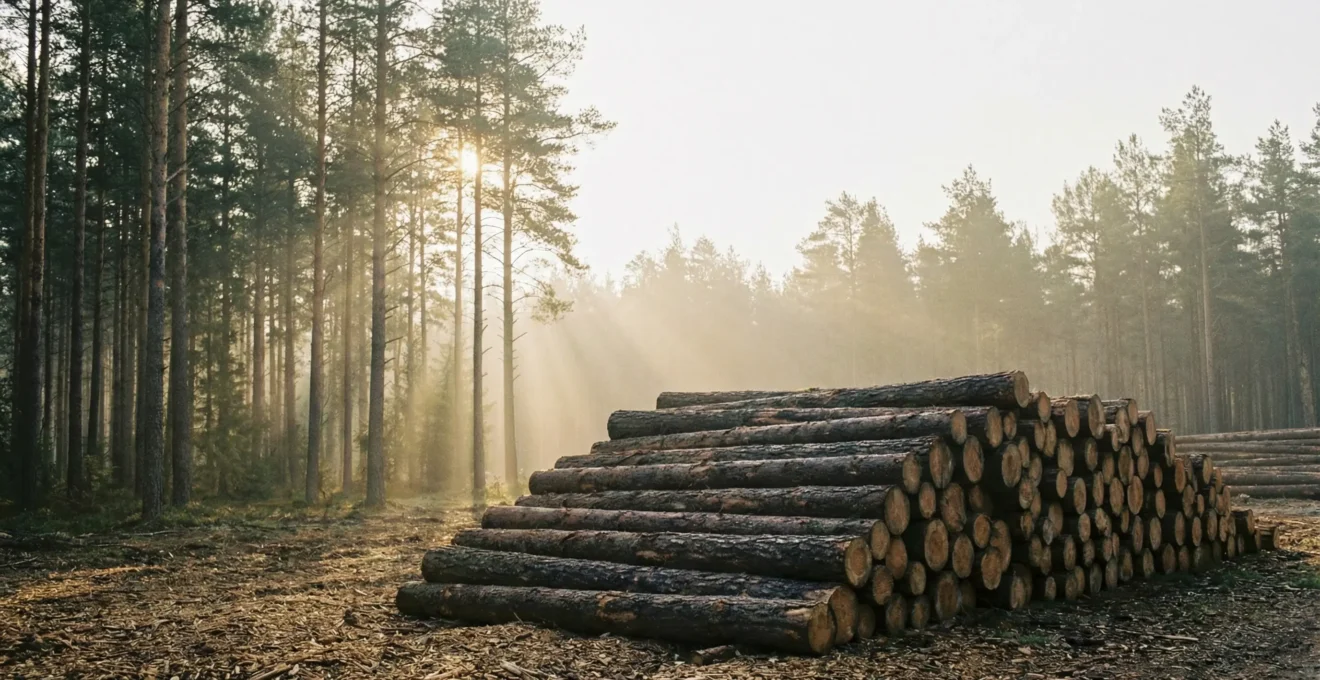
Buying “certified” wood isn’t always as straightforward as spotting a tree logo; the real story lies in the “Chain of Custody.”
- FSC Mix guarantees only 70% certified material, while the rest is merely “controlled.”
- “Made in Europe” is not a guarantee of ethical logging, as proven by recent scandals in Romania.
Recommendation: Always verify the specific license code on the FSC database to confirm the manufacturer’s actual certification scope before purchasing.
You stand in a showroom, running your hand across a dining table. The sticker says “Sustainable,” and there is a recognizable tree logo. But is that enough? For most buyers, the green stamp signals that the wood comes from a pristine, protected forest. Unfortunately, the reality of the global timber trade is far more opaque. While we often worry about the aesthetics or the price, the crucial detail lies in the fine print of the certification label.
Common advice suggests simply “looking for the logo” or avoiding tropical woods entirely. While well-intentioned, these are platitudes that ignore the complexity of modern supply chains, where “Controlled Wood” and “Mass Balance” are standard industry terms. We need to move beyond the surface branding.
The real key to ethical furniture buying isn’t just the logo, but understanding the Chain of Custody (CoC). This system tracks timber from the stump to the showroom, but it also allows for loopholes that many consumers miss. By dissecting the difference between “FSC Mix” and “FSC 100%,” we can reveal what you are actually paying for: genuine conservation or just a mitigated risk.
This analysis will guide you through the technicalities of timber labeling, from the risks of “Controlled Wood” to the carbon realities of bamboo versus cork.
To navigate this complex landscape, we have structured this guide into specific clusters addressing the most critical aspects of timber certification.
Table of Contents: Deciphering the Timber Supply Chain
- Why ‘FSC Controlled Wood’ Is Not the Same as Sustainable
- How to Check a License Code on the FSC Public Search
- PEFC vs FSC: Is There a Real Difference in Protection?
- The Risk of Buying Tropical Hardwood Without Documentation
- When to Choose Fast-Growing Softwood Over Slow Hardwood
- Why ‘Made in Europe’ Doesn’t Always Mean Ethical Labour
- Bamboo vs Cork: Which Is the Lower Carbon Flooring?
- Is Bamboo Flooring Hard Enough for Dogs and High Heels?
Why ‘FSC Controlled Wood’ Is Not the Same as Sustainable
When you see the “FSC Mix” label, it is easy to assume that 100% of the wood in that product comes from a certified, sustainably managed forest. However, this label actually indicates a blend. It means that while a portion of the material is certified, the remainder is what the industry calls “Controlled Wood.” This category is not fully certified; it is merely screened to exclude the most egregious forms of destruction.
The “Mix” system relies on a volume credit method. According to FSC US standards for the “Mix” label, the product can contain up to 30% controlled wood alongside the certified material. While this prevents the wood from being outright illegal, it does not guarantee the high-level environmental stewardship associated with the “FSC 100%” label. It is a risk mitigation tool, not a guarantee of sustainability excellence.
To understand what is screened out, we must look at the specific criteria used. The focus is on avoiding the absolute worst-case scenarios rather than ensuring best practices.
Evaluation Checklist: The 5 Categories of Unacceptable Sources
- Illegality: Wood that is illegally harvested according to local laws.
- Human Rights: Wood harvested in violation of traditional and human rights (including forced or child labour).
- Conservation Values: Wood harvested in forests where management activities threaten high conservation values.
- Land Use Change: Wood harvested in forests being converted to plantations or non-forest use.
- GMOs: Wood from forests in which genetically modified trees are planted.
If a wood source does not violate these five specific points, it can enter the supply chain as Controlled Wood. This means a forest could still be logged unsustainably—for example, by clear-cutting an old-growth area—provided it doesn’t strictly violate these “unacceptable” definitions. For a buyer seeking genuine regeneration, “Mix” is a compromise, not a solution.
Understanding these definitions is the first step in avoiding greenwashing.
How to Check a License Code on the FSC Public Search
Trust, but verify. A logo on a box is easy to print; a valid Chain of Custody (CoC) certificate is harder to fake. The only way to be certain that the furniture you are buying is genuinely covered by the FSC system is to audit the license code found on the product. This code, usually in the format FSC-C######, is your digital key to the product’s history.
Visual inspection is the first line of defense. As illustrated below, looking closely at the material and the accompanying documentation is crucial. The texture of the wood itself tells a story, but the paperwork confirms it.
As you can see, precise inspection matters. However, physical inspection has limits. You must understand what type of certificate the manufacturer holds. There is a fundamental difference between managing a forest and managing a factory.
The table below clarifies the distinction between the two main types of certification you might encounter when searching the database. It highlights that a “Chain of Custody” certificate does not mean the company owns the forest; it means they have a system to track the wood they buy.
This distinction is crucial, as tracked by the FSC Forest Management vs Chain of Custody frameworks.
| Certification Type | What It Certifies | Who Needs It | Consumer Implication |
|---|---|---|---|
| Forest Management (FM) | The forest itself is managed sustainably according to FSC’s 10 Principles | Forest owners and managers | Confirms wood source is responsibly managed |
| Chain of Custody (CoC) | FSC material is tracked and separated throughout supply chain | Manufacturers, processors, traders | Only confirms proper handling, not forest origin quality |
When you enter the license code into the FSC Public Search, look for the “Product Scope.” A manufacturer might be certified to sell FSC paper packaging, but if their wooden tables aren’t listed in the scope, that table is not certified. This is a common loophole where companies use their certification status to imply that all their products are compliant, when only a fraction truly are.
Once you verify the code, the next question is often about the standard itself.
PEFC vs FSC: Is There a Real Difference in Protection?
In the world of timber certification, two giants dominate: the Forest Stewardship Council (FSC) and the Programme for the Endorsement of Forest Certification (PEFC). A common platitude is that they are “basically the same.” While both aim to promote sustainable forestry, their mechanisms and origins differ significantly. FSC was born from environmental NGOs and human rights groups, whereas PEFC was created largely by forest owners and industry representatives.
This difference in DNA leads to distinct approaches on the ground. For a furniture buyer concerned with indigenous rights and strict conservation, the nuances matter. FSC generally mandates stricter adherence to social permissions before logging can begin.
The following comparison highlights the structural differences, particularly regarding how they treat the rights of local populations and the conversion of natural forests.
These divergences are evident when comparing FSC vs PEFC Key Differences in their operational standards.
| Criteria | FSC | PEFC |
|---|---|---|
| Governance Model | Centralized NGO-led global criteria (top-down) | Endorsement of national standards (bottom-up) |
| Indigenous Rights | Requires Free, Prior and Informed Consent (FPIC) – veto power | Consultation required but not systematically applied globally |
| Plantation Cut-off Date | 1994 – prevents certification of recently deforested areas | 2010 – more lenient threshold |
| Controversial Companies | Policy for Association prohibits certification of companies with controversial activities | No restriction on membership for companies with controversial activities outside certified lands |
One major point of contention is the “Plantation Cut-off Date.” FSC will not certify plantations established on land deforested after 1994. PEFC uses a 2010 cutoff. This means a forest cleared in 2005 to plant eucalyptus could be PEFC certified but not FSC certified. Furthermore, in terms of global scale, PEFC is larger, often because its national-level endorsement system is easier for large-scale forestry operations to adopt.
In terms of global coverage, there are currently 280 million hectares (PEFC) vs 158 million hectares (FSC) certified. This volume disparity suggests that while PEFC offers breadth, FSC often provides the depth of protection required by rigorous ethical standards.
While certification standards debate policy, the real danger often lurks in the lack of any documentation at all.
The Risk of Buying Tropical Hardwood Without Documentation
Tropical hardwoods like Teak, Mahogany, and Rosewood are prized for their durability and beauty. However, purchasing these woods without an unbroken Chain of Custody is one of the highest-risk actions a consumer can take. The darker side of the luxury timber market is fueled by illegal logging operations that devastate biodiversity hotspots.
The scale of this industry is staggering. It is not just a few rogue loggers; it is a sophisticated global network. The illustration below captures the industrial scale of tropical timber exports, reminding us that once these massive logs enter the global shipping network, their origin becomes incredibly difficult to trace without rigorous documentation.
As depicted, the volume of timber moving through these ports creates ample opportunity for laundering illegal wood into legitimate supplies. Without strict tracking, “legal” wood and “illegal” wood look exactly the same on the dock.
The financial incentive for this fraud is immense. The global illegal timber trade generates up to $152 billion annually, ranking it alongside other major transnational crimes. When you buy cheap, undocumented tropical hardwood, you are statistically likely to be funding these operations. The lack of paperwork is not a bureaucratic oversight; it is often a deliberate feature of the supply chain to obscure the destruction of rainforests.
Always demand full CoC documentation for tropical species. If the seller cannot prove exactly where it came from, assume the worst.
Given these risks, many buyers are turning to alternatives closer to home.
When to Choose Fast-Growing Softwood Over Slow Hardwood
A common misconception is that “hardwood is good, softwood is cheap.” From a sustainability perspective, however, fast-growing softwoods (like Pine) or plantation hardwoods (like Acacia) often represent a superior choice. These species grow rapidly, allowing for shorter rotation cycles that exert less pressure on primary, old-growth forests. They are the crops of the timber world, farmed rather than mined.
Countries like Vietnam have recognized this potential. Vietnam now produces over 20 million cubic meters annually of plantation wood, primarily acacia. This domestic source is abundant and renewable. Yet, paradoxically, much of this sustainable timber is chipped for pulp rather than being used for furniture, simply because the market demands the look of exotic tropical hardwoods.
By shifting our aesthetic preference towards these fast-growing species, we can reduce the demand that drives illegal logging in the tropics. Plantation timber, when managed correctly (FSC certified), creates a closed loop. The wood is harvested and replanted in a cycle that can continue indefinitely without expanding into virgin rainforest.
Choosing Pine or Acacia: When buying furniture, consider if the structural strength of slow-growth oak or teak is truly necessary for the item. For many applications, verified plantation wood is not only sufficient but ethically superior.
However, simply buying wood from a “safe” continent like Europe is not a fail-safe strategy.
Why ‘Made in Europe’ Doesn’t Always Mean Ethical Labour
There is a persistent bias that illegal logging and corruption are problems exclusive to the tropics. Many buyers see “Made in EU” or “Sourced in Europe” and assume the timber is compliant with strict environmental and labor laws. This geographical complacency is dangerous. Europe is home to some of the last remaining primeval forests, particularly in the Carpathians, and they are under siege.
Romania serves as a stark warning. Despite being an EU member state, its timber sector has been riddled with corruption. According to the Romanian Ministry of Environment, more than half of the country’s timber represents over 50% of the €6 billion annual wood industry revenue derived from illegal sources. This is not a marginal issue; it is systemic.
The Fall of a Timber Giant: Schweighofer
Austrian timber giant Schweighofer was stripped of its FSC certification following a 110-page investigation report citing ‘clear and convincing evidence’ that the company was involved systematically in the trade of timber harvested in violation of existing laws and had associated with individuals and companies with criminal and corrupt backgrounds. The company had been Romania’s largest timber buyer since 2002.
This case study illustrates that even certified, large-scale European companies can be deeply implicated in illegal logging. The “Made in Europe” label tells you where the wood was processed, but it guarantees nothing about the legality of the harvest or the treatment of the workers. Violence against forest rangers and corruption in the supply chain are real issues within EU borders. Due diligence must extend everywhere.
Beyond traditional timber, alternative materials like bamboo and cork are gaining popularity, but they come with their own complexities.
Bamboo vs Cork: Which Is the Lower Carbon Flooring?
For the eco-conscious buyer, the choice often narrows down to bamboo or cork. Both are touted as rapidly renewable alternatives to timber. Bamboo is a grass that regenerates in years, and cork is bark harvested without killing the tree. However, when analyzing the carbon footprint, we must look beyond the forest to the factory.
Bamboo flooring is heavily processed. To turn round, hollow grass stalks into flat, hard planks, the raw material must be shredded, boiled, and glued back together under high pressure. This process requires significant energy and, crucially, large amounts of adhesives and resins. These binders can contain formaldehyde and contribute to a higher embodied carbon footprint than the raw plant suggests. The “green” grass becomes an industrial composite.
Cork, by contrast, requires far less processing. The bark is boiled and pressed, often using the natural suberin in the cork as a binder, or low-toxicity adhesives. Furthermore, cork forests (Montado) are potent carbon sinks that are never clear-cut. From a purely Industrial Carbon perspective, cork generally retains a lower footprint because it remains closer to its raw state. Bamboo’s sustainability claim relies on its growth speed; cork’s relies on its minimal processing and harvest method.
However, sustainability implies longevity. A low-carbon floor is useless if it needs replacing in five years.
Key Takeaways
- FSC Mix allows up to 30% controlled wood, meaning it is not 100% certified.
- Chain of Custody is the only way to track wood from forest to factory; check the license code.
- “Made in Europe” is not a guarantee of legality; check for specific certifications.
Is Bamboo Flooring Hard Enough for Dogs and High Heels?
If you choose bamboo, you are likely banking on its legendary hardness. Marketing often claims strand-woven bamboo is harder than Red Oak or Maple. While technically true on the Janka hardness scale, this data point can be misleading regarding real-world durability. The hardness of the material does not always equal the durability of the finish.
Strand-woven bamboo is incredibly dense, making it resistant to deep dents from high heels or dropped objects. However, the resin-heavy surface can still be susceptible to micro-scratches from dog claws or grit. Unlike solid hardwood, which can be sanded and refinished multiple times, many bamboo floors are veneers or heavily glued composites that are difficult, if not impossible, to refinish effectively. Once the surface is marred, the floor’s lifespan is compromised.
Therefore, for high-traffic homes with pets, the “hardness” stat is less important than the quality of the factory finish (aluminum oxide coatings are best) and the ability to repair the floor. A slightly softer wood that can be refinished in 20 years is often a more sustainable choice than a rock-hard bamboo floor that ends up in a landfill because it cannot be restored.
Don’t just buy the label; audit the product. Check the license code on the FSC database today to confirm exactly what you are bringing into your home.